 Français
 Italiano
 English


The Lourdes torchlight procession, officially known as the Marian torchlight procession, is one of the most iconic moments of prayer at the Shrine of Our Lady of Lourdes. During the pilgrimage season, it is usually held in the evening at 9.00 pm. Holding candles, pilgrims pray the Rosary, sing the Ave Maria of Lourdes and walk together through the Sanctuary, entrusting their intentions to the Virgin Mary.
The light of the candles symbolises faith and Christ, the light of the world. Whether alone, with family, in a group or as part of a pilgrimage, everyone can experience this procession as a moment of prayer, communion and hope.
Key points
- The Marian torchlight procession is one of the major spiritual events in Lourdes.
- It usually takes place at 9.00 pm during the pilgrimage season.
- Times may vary depending on the period and the celebrations.
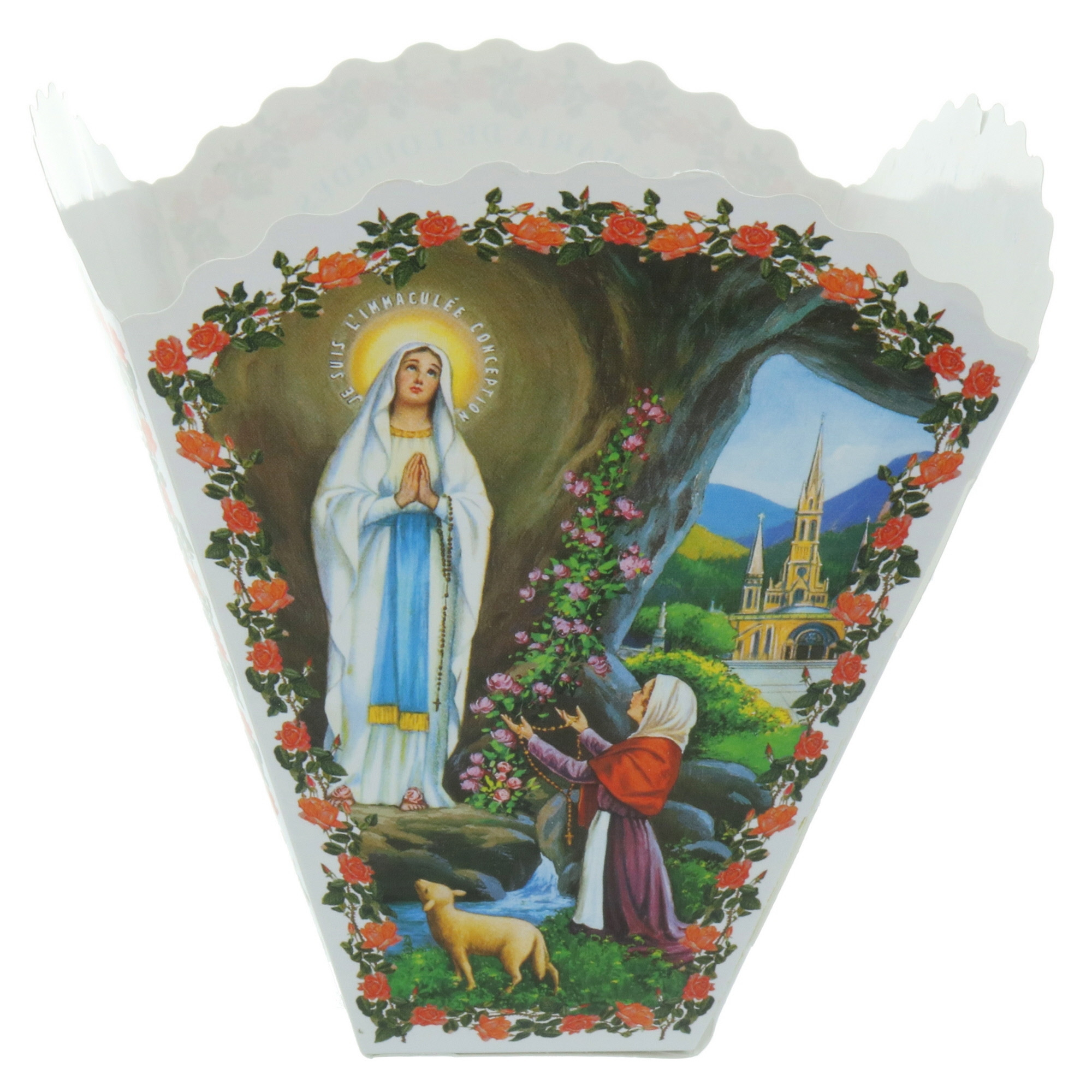
- Pilgrims traditionally carry a candle protected by a cardboard torch.
- The Rosary and the Ave Maria of Lourdes are recited during the procession.
- Pilgrims may take part alone, with their family or in a group.
- You do not need to have taken part in a religious procession before to join in.
- The light of the candle symbolises, in particular, faith and Christ, the light of the world.
What is the torchlight procession in Lourdes?
The Lourdes torchlight procession is a Marian procession that brings pilgrims together within the grounds of the Sanctuary of Our Lady of Lourdes. It takes place in the evening, in an atmosphere of prayer, to the rhythm of the Rosary, Marian hymns and, in particular, the Ave Maria of Lourdes.
The faithful walk carrying a candle, usually surrounded by a cardboard torch. In the night, the lights carried by the pilgrims give the procession its instantly recognisable character.
But beyond the visual beauty of this gathering, the procession is above all a time of Marian prayer. Everyone can offer up an intention, give thanks, pray for a loved one or simply walk with the other pilgrims in silence and trust.
As Lourdes is an international shrine, the faithful come from many different countries. Languages, cultures and life stories come together in a single prayer, giving the procession a particularly universal dimension.
Why is there a procession in Lourdes?
The tradition of the procession in Lourdes is closely linked to the apparitions of 1858 and to the message conveyed by the Virgin Mary to Saint Bernadette Soubirous. Without going into the full history of the apparitions, it is important to understand that the procession has its origins in this invitation to come and pray together.
The Virgin Mary’s request to Bernadette
In 1858, Bernadette Soubirous reported several apparitions of the Virgin Mary at the Grotto of Massabielle. Among the words that would leave a lasting mark on Lourdes was the invitation to come in procession.
This collective dimension is essential. A pilgrimage to Lourdes is not merely a personal journey: it is also a journey undertaken with others, in prayer and in faith.
From Mary’s request to a global tradition
Over the decades, the procession has become one of the Shrine’s most iconic practices. Individual pilgrims, families, the sick, members of religious orders, laypeople and organised groups come together there, representing a wide variety of languages and nationalities.
This universal dimension is one of Lourdes’ most distinctive features. The Rosary can be prayed in several languages, whilst the Marian hymns allow everyone to participate together, transcending cultural differences.
When does the torchlight procession take place in Lourdes?
During the pilgrimage season, the Marian torchlight procession in Lourdes is usually scheduled for 9.00 pm. However, times may vary depending on the time of year, major pilgrimages or special celebrations.
It is therefore advisable to check the Sanctuary’s programme before your visit, particularly if you are visiting Lourdes out of season.
| Period | Usual celebration | Approximate time |
|---|---|---|
| April to October | Marian torchlight procession | 9.00 pm |
| Off-season | Variable programme / torchlight rosary depending on the time of year | To be checked |
During busy periods, it may be worth arriving a few minutes before the start. This allows you to join the gathering more calmly and find your place.
How does the torchlight procession take place?
The order of the procession may vary slightly depending on the time of year or major pilgrimages, but several elements recur regularly: the gathering, the walk with candles, the Rosary, the Hail Mary and a final period of prayer.
The gathering of pilgrims
Before it begins, pilgrims and groups gather within the grounds of the Sanctuary. The exact starting point or arrangements may vary depending on the day’s programme.
For an individual pilgrim, the main thing is to arrive at the gathering a little early and follow the instructions given on the spot.
The candle and the torch
The two terms are sometimes confused. The cierge refers to the candle itself. The torch commonly refers to the paper or cardboard sleeve placed around the candle or the flame.
Pilgrims traditionally carry a candle fitted with this sleeve. The torch may help to shield the flame and sometimes features a prayer or the Hail Mary.
The Palais du Rosaire offers, amongst other things, a set of 5 torch holders for procession candles featuring the Hail Mary , inspired by the torch holders used during the processions at Lourdes.
The Rosary prayer
The Rosary plays a central role in the procession. The decades of the Rosary are recited as the procession moves forward, allowing participants to meditate on the mysteries of Christ’s life with the Virgin Mary.
In Lourdes, this prayer takes on a special significance due to the international diversity of the pilgrims. Several languages may be spoken in turn, but everyone joins in the same prayer.
The ‘Ave Maria of Lourdes’
The famous ‘Ave Maria of Lourdes’ accompanies the procession and is one of its most recognisable moments. Its refrain, taken up by the pilgrims, creates a particularly strong sense of communion.
At night, the singing and the lights create a very special atmosphere, but the procession remains, above all, a time of prayer.
The arrival and the final time of prayer
The procession concludes in an atmosphere of contemplation and communion. The exact arrangements may vary, but this final period allows pilgrims to continue their prayer before leaving the Sanctuary.
What do the candles in the Lourdes procession symbolise?
The procession candle is not merely an accessory. In Christian tradition, light refers in particular to Christ, who is presented as the light of the world.
Carried through the night, this light also expresses faith and hope. It reminds us that prayer can remain alive even when the journey seems most difficult.
For many pilgrims, the candle also becomes a visible sign of a prayer or an intention entrusted to God. Some pray for their family, for someone who is ill, for a particular difficulty, or simply as an act of thanksgiving.
When several hundred or several thousand candles are gathered together – depending on the time of year and the number of people present – the scene also comes to symbolise a community moving forward together in faith.
How can I take part in the torchlight procession?
Taking part in the Marian procession is simple. No pilgrim needs to be familiar with the rites of Lourdes to join the gathering. However, a few practical tips will help you prepare better for this occasion.
Do I need to register?
For ordinary individual participation, pilgrims can generally join the procession. For organised groups or those with special needs, it is best to consult the information provided by the Sanctuary.
Do you need to bring a candle?
It is possible to take part in the prayer without carrying a candle. However, the candle is part of the visual and spiritual tradition of the procession.
If you wish to carry one, you can choose a candle suitable for walking and carry it alongside a cardboard torch.
How early should I arrive?
At busy times, it is advisable to arrive a little before 9 pm. You do not need to allow a great deal of time, but arriving a few minutes early can make your arrival more comfortable.
Can children take part?
Yes, families can take part in the procession. If a child is carrying a lit candle, the presence and supervision of an adult are essential, particularly because of the flame and the crowds.
Can people who are unwell or have reduced mobility take part?
Lourdes places great importance on the well-being of those who are unwell, frail or disabled. For any specific requirements regarding accessibility or assistance, it is recommended that you contact the Information Centre or the Sanctuary staff.
Which candle or torch should I choose for the Lourdes procession?
No special equipment is required to take part in the procession. However, many pilgrims choose to carry the traditional candle, accompanied by a protective torch.
Procession candles
A candle intended for the procession must be practical enough to hold whilst walking. The Palais du Rosaire offers a selection of Lourdes candles to accompany your times of prayer.
In particular, you can discover this set of Lourdes processional candles , which is ideal for this type of walk.
The torch with the Ave Maria
Wrapped around the candle, the cardboard torch encases the flame whilst sometimes bearing a prayer text. The set of 5 processional candle torches with the Hail Mary can therefore be used on an individual or family pilgrimage.
A rosary to accompany the Rosary
As the Rosary is at the heart of the procession, some pilgrims also choose to bring a rosary with them.
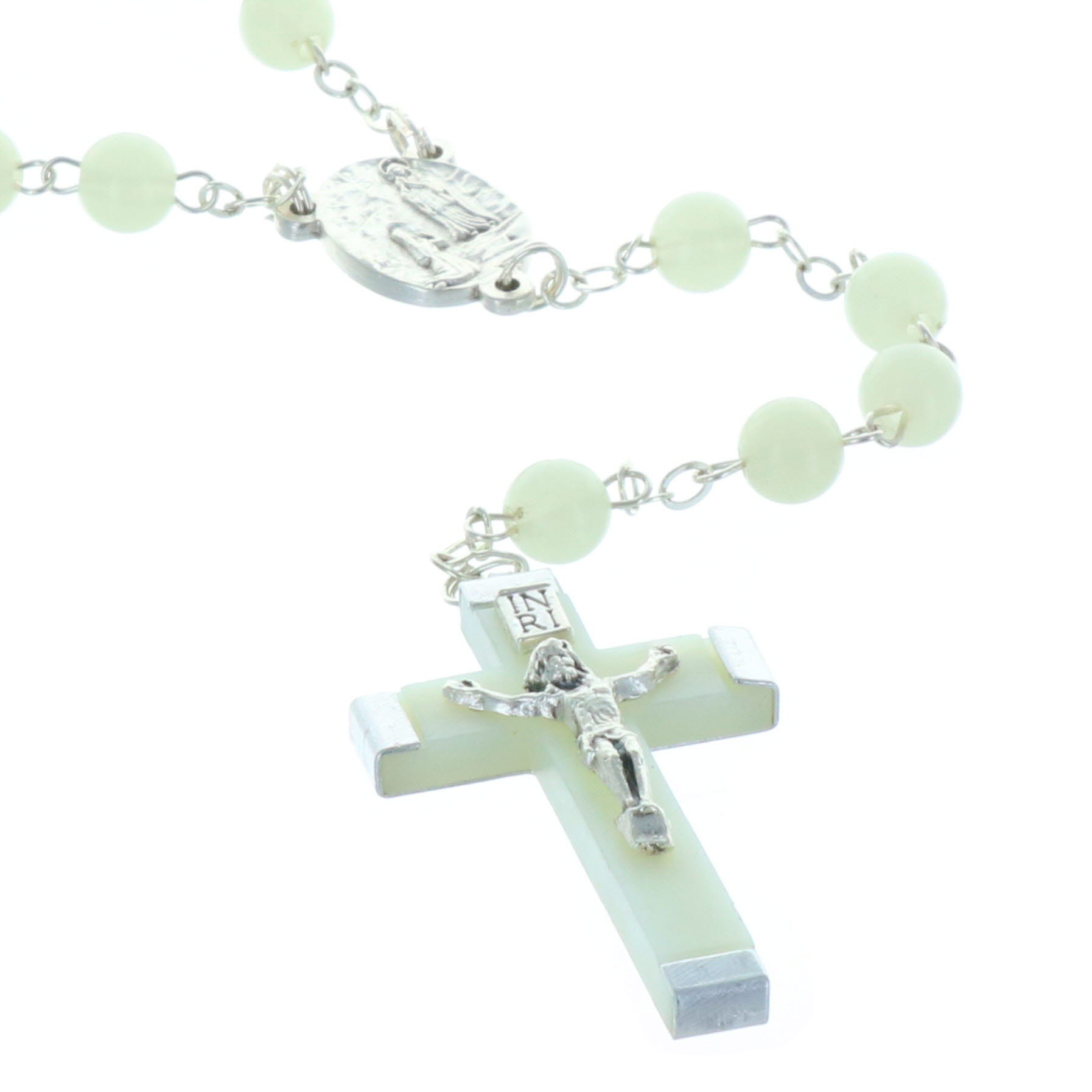
Le Palais du Rosaire offers, in particular, a selection of illuminated rosaries , which are particularly evocative during evening prayer.
Among them, the illuminated rosary of the Apparition in a box from Lourdes can serve both as an object of prayer and as a souvenir of the pilgrimage.
Why is the torchlight procession such a memorable moment in Lourdes?
Of all the highlights experienced at the Sanctuary, the evening procession is often one of those that lingers longest in pilgrims’ memories.
As night falls, the tiny lights form an image that has become emblematic of Lourdes. Silence alternates with singing, different languages echo one another, and people from many countries walk in the same direction.
This contrast between the night and the light of the candles naturally lends the procession great visual power. Yet its meaning goes far beyond the spectacle.
For some, it is a matter of entrusting an important intention to God. For others, it is a way of giving thanks after a trial. Still others come simply to pray in silence. The sick and those accompanying them also play an essential part in this communal prayer.
The procession thus serves as a reminder that a pilgrimage is not merely an individual endeavour. In Lourdes, everyone walks with their own story, but no one prays entirely alone.
Marian procession and Eucharistic procession: what is the difference?
The Marian torchlight procession and the Eucharistic procession are two different celebrations. They must not be confused.
| Marian torchlight procession | Eucharistic procession | |
|---|---|---|
| Usual time | In the evening | Earlier in the day |
| Focus of the celebration | Marian devotion | Blessed Sacrament |
| Characteristic prayer | Rosary and Marian hymns | Eucharistic prayer |
| Visible symbol | Candles and torches | Presence of the Blessed Sacrament |
The timetables usually provided distinguish, in particular, between a Eucharistic procession scheduled earlier in the day and the Marian torchlight procession at 9.00 pm during the pilgrimage season.
Prayer to Our Lady of Lourdes before the torchlight procession
O Our Lady of Lourdes,
On this night when our candles light the way,
we come to lay before you our joys, our worries and our hopes.
Teach us to hold fast to the light of faith when the path becomes more difficult.
Present to your Son Jesus the intentions we carry in our hearts: those of our families, our loved ones, the sick and all those in need of comfort.
May this procession help us to walk together in confidence, to pray with simplicity and to recognise in Christ the light that illuminates our lives.
Our Lady of Lourdes, pray for us.
Saint Bernadette, pray for us.
Amen.
FAQs on the torchlight procession in Lourdes
What time does the torchlight procession in Lourdes take place?
During the pilgrimage season, the Marian torchlight procession is usually scheduled for 9.00 pm. As timings are subject to change, it is advisable to check the Sanctuary’s programme before visiting.
When does the torchlight procession take place in Lourdes?
The Marian torchlight procession usually takes place from April to October. Outside this season, other torchlight prayer services may be organised depending on the time of year.
Where does the torchlight procession take place?
The procession takes place within the grounds of the Sanctuary of Our Lady of Lourdes. The route and arrangements may vary depending on the celebrations and the number of visitors.
Do I need to register to take part?
Individual pilgrims can generally join the procession. Organised groups are advised to check the Sanctuary’s information for any specific arrangements.
Do I need to buy a candle to take part?
A candle is not a requirement for praying or taking part. However, it is one of the traditional symbols of the torchlight procession.
Why do we carry a candle during the procession?
The candle symbolises the light of Christ and expresses faith and hope. It may also accompany a personal prayer intention.
What do we pray during the procession at Lourdes?
The procession is punctuated in particular by the recitation of the Rosary and Marian hymns, including the Ave Maria of Lourdes.
What is the difference between a votive candle and a torch?
A candle is the candle itself. A torch commonly refers to the protective cover placed around the candle, often made of cardboard, to enclose the flame and possibly bear a prayer.
Can children take part in the procession?
Yes, families can take part in the procession. When carrying a lit candle, the presence and supervision of an adult are essential.
What is the difference between the Marian procession and the Eucharistic procession?
The torchlight procession is a Marian procession centred in particular on the Rosary and the Virgin Mary. The Eucharistic procession is a separate celebration centred on the Blessed Sacrament.
Whether you are planning a pilgrimage to Lourdes soon or wish to continue this spirit of prayer from home, discover the candles, torches and rosaries from the Palais du Rosaire, dispatched from Lourdes.

 Preparations for Pope Leo XIV’s visit to Lourdes in 2026
 Torchlight Procession in Lourdes - A moment of Prayer and Light
 The Popes at Lourdes: from John Paul II to Leo XIV’s visit in 2026
 Biblical first names: meanings and ideas for girls and boys in 2026
 What is the Assumption?
