 Français
 Italiano
 English

Padre Pio, whose real name was Francesco Forgione, was an Italian Capuchin friar born in 1887 in Pietrelcina and who died in 1968 in San Giovanni Rotondo. Known for his intense life of prayer, his ministry to the faithful and the stigmata he bore for several decades, he became one of the best-known Catholic saints of the 20th century.
Ordained a priest in 1910, Padre Pio devoted much of his life to celebrating Mass, hearing confessions, praying and caring for the sick and those in need. Beatified in 1999 and then canonised by Pope John Paul II on 16 June 2002, Saint Pio of Pietrelcina is now venerated by the faithful throughout the world. His feast day is celebrated every year on 23 September.
Key facts about Padre Pio
- Padre Pio was born Francesco Forgione on 25 May 1887 in Pietrelcina, Italy.
- He entered the Capuchin novitiate in 1903 and took the name Brother Pio.
- He was ordained a priest in 1910.
- Permanent stigmata appeared on his body in 1918.
- He devoted a large part of his ministry to celebrating Mass, hearing confessions and prayer.
- He helped to establish the Casa Sollievo della Sofferenza, a major hospital which opened in 1956.
- Padre Pio died on 23 September 1968 in San Giovanni Rotondo.
- John Paul II beatified him in 1999 and then canonised him in 2002.
- The feast day of Saint Padre Pio is celebrated on 23 September.
Who was Padre Pio?
Padre Pio, also known as Saint Pio of Pietrelcina, was an Italian priest belonging to the Order of the Capuchin Friars Minor. His life was deeply marked by prayer, the Eucharist, confession and the spiritual guidance of the faithful.
His fame quickly spread beyond Italy. Pilgrims began to travel to San Giovanni Rotondo to attend his Masses, go to confession with him or entrust their intentions to him. His spiritual character, as well as the extraordinary phenomena reported in connection with his life, helped to make him a major figure in contemporary Catholicism.
Padre Pio’s childhood in Pietrelcina
Francesco Forgione was born on 25 May 1887 in Pietrelcina, a small town in Campania, in southern Italy. He grew up in a rural and deeply devout family.
From a very young age, Francesco showed a particular interest in prayer and religious life. This vocation led him to enter the Capuchin novitiate at Morcone in January 1903, at the age of 15.
This marked the beginning of a life devoted to God that would last for more than sixty years.
Why was he called Padre Pio?
Francesco Forgione took the religious name Pio when he joined the Capuchins. After his ordination to the priesthood, he became known as Padre Pio, which means ‘Father Pio’ in Italian.
Following his canonisation, he is officially known as Saint Pio of Pietrelcina, but the name Padre Pio remains the one by which he is best known and most widely prayed to throughout the world.
How did Padre Pio become a priest?
After joining the Capuchins, Francesco Forgione continued his religious and theological training. He took his vows and gradually progressed towards the priesthood.
He was ordained a priest on 10 August 1910 in Benevento Cathedral.
However, his frail health made the early years of his ministry difficult. After spending various periods alternating between his family and the Capuchin communities, he finally moved to San Giovanni Rotondo in 1916.
This place would remain forever linked to his story. Padre Pio lived there for most of the rest of his life, and pilgrims from all over the world continue to visit it even after his death.
Why is Padre Pio famous?
Padre Pio’s fame stems from several aspects of his life. The best known are his stigmata, but to reduce his story to this phenomenon would be to overlook the essence of his ministry.
Padre Pio was, above all, a priest deeply devoted to the Eucharist and to the sacrament of confession. He devoted many hours to the faithful who came to him seeking forgiveness, spiritual guidance or simply a listening ear.
Numerous accounts also attribute healings and various mystical phenomena to him. Some of these stories form part of popular devotion, whilst specific healings have been investigated by the Church as part of the process of his beatification and canonisation.
Padre Pio’s stigmata
In Christian tradition, stigmata refer to physical wounds reminiscent of Christ’s wounds during his Passion.
On 20 September 1918, Padre Pio developed permanent wounds on his hands, feet and side. For his followers, these marks evoked the wounds of the crucified Christ.
The phenomenon quickly attracted attention and was the subject of various medical and ecclesiastical examinations. The stigmata also contributed to the arrival of a growing number of pilgrims in San Giovanni Rotondo.
It is important, however, to distinguish between faith and the religious interpretation of these wounds and any scientific assertion regarding their origin. Padre Pio’s life gave rise, in his own time, to scrutiny, questioning and investigations by the Church authorities.
Padre Pio and confession
One of the most important aspects of Padre Pio’s life was his ministry as a confessor.
After the lifting of restrictions that had temporarily curtailed his ministry, Padre Pio devoted a considerable part of his days to hearing the faithful in confession. There were so many pilgrims that it was sometimes necessary to organise their visits.
For him, confession was above all a path of conversion, reconciliation and a return to God. This aspect goes a long way towards explaining why thousands of people travelled to San Giovanni Rotondo, driven by far more than mere curiosity about his stigmata.
Did Padre Pio perform miracles?
Many accounts surrounding Padre Pio refer to unexplained healings, graces obtained through prayer, alleged knowledge of facts he apparently could not have known, or even instances of bilocation.
However, a distinction must be made between the testimonies passed on by the faithful and the miracles officially investigated and recognised by the Church as part of the processes of beatification and canonisation.
In the Catholic tradition, Padre Pio is not, moreover, regarded as the source of the miracle: the faithful seek his intercession with God.
What miracles are attributed to Padre Pio?
Both during his lifetime and after his death, many people claimed to have received a healing or a grace after meeting Padre Pio or seeking his intercession.
During the processes leading to his recognition as Blessed and then as a saint, the Church examined specific healings in accordance with the procedure laid down for causes of canonisation.
Accounts of healings
Healings form a significant part of the testimonies associated with Padre Pio. The Catholic Church examined medical cases in particular as part of his beatification and subsequently his canonisation.
Among the best-known cases is that of the young Matteo Pio Colella, who was suffering from a serious illness. His healing was examined during the process leading to Padre Pio’s canonisation.
For Catholics, these recognitions do not mean that Padre Pio possessed a personal power of healing: they are understood within the context of prayer addressed to God and the intercession of the saints.
Accounts of bilocation
Testimonies have also attributed instances of bilocation to Padre Pio, that is, the phenomenon of him having been seen in one place whilst he was physically elsewhere.
These accounts form part of the many testimonies surrounding his mystical life. They must be presented as such and not as historical facts that can be established in the same way as a date, an ordination or the founding of a hospital.
Why was Padre Pio placed under Church supervision?
Padre Pio’s growing fame and the extraordinary phenomena attributed to him aroused fervour, curiosity and questions alike.
The ecclesiastical authorities therefore carried out several examinations and investigations. Restrictions were also imposed on his public ministry at certain times.
In 1931, Padre Pio saw several of his priestly faculties restricted. In particular, he was temporarily removed from certain public activities. From 1933 onwards, these restrictions were gradually lifted and he was able, in particular, to resume his ministry to the faithful on a broader scale.
Further difficulties and scrutiny arose subsequently. It would therefore be an oversimplification to summarise this period by stating that ‘the Vatican was against Padre Pio’. The Church was, in particular, seeking to examine the phenomena attributed to him and the consequences of his immense popularity.
Padre Pio and the Casa Sollievo della Sofferenza
Padre Pio’s life cannot be reduced to the stigmata or mystical phenomena alone. It was also marked by a very practical endeavour to help the sick: the Casa Sollievo della Sofferenza, which can be translated as ‘House of Relief from Suffering’.
The project took shape in the 1940s with the aim of creating an institution combining medicine, human support and Christian charity.
The hospital was officially opened in San Giovanni Rotondo on 5 May 1956.
This work illustrates an essential aspect of Padre Pio’s spirituality: prayer had to be accompanied by practical care for those who suffer.
When and how did Padre Pio die?
Towards the end of his life, Padre Pio’s health became increasingly frail.
On 22 September 1968, he celebrated his last Mass and made his final public appearance. He died the following night, on 23 September 1968, in San Giovanni Rotondo. He was 81 years old.
This date is now particularly significant for his devotees, as it has become the date of his liturgical feast day.
When was Padre Pio canonised?
After his death, devotion to Padre Pio continued to grow throughout the world. The Church subsequently initiated the process to officially examine his life, his virtues and the miracles attributed to his intercession.
The beatification of Padre Pio
Padre Pio was beatified on 2 May 1999 by Pope John Paul II, before a vast crowd of the faithful.
The canonisation of Padre Pio
Three years later, on 16 June 2002, John Paul II canonised Padre Pio in Rome.
Francesco Forgione thus officially became Saint Pio of Pietrelcina.
When is Padre Pio’s feast day?
Padre Pio’s feast day is celebrated on 23 September, the anniversary of his death in 1968.
Every year, this day is a special time of prayer for those devoted to Saint Pio of Pietrelcina. Masses, novenas and times of prayer and reflection may be organised in his honour.
Where is the Shrine of Padre Pio?
The name Padre Pio remains deeply associated with San Giovanni Rotondo, in Puglia, in southern Italy. It was in this town that he spent more than half a century of his religious life and that he died in 1968.
San Giovanni Rotondo is now an important place of pilgrimage dedicated to Saint Pio of Pietrelcina. The faithful from all over the world visit to pray and explore the places associated with his life.
His remains now rest in the church dedicated to Saint Pio of Pietrelcina in San Giovanni Rotondo.
Why pray to Padre Pio?
In the Catholic tradition, praying to Padre Pio means asking for his intercession with God. It is not, therefore, a matter of regarding the saint as the one who grants the requested graces himself.
The faithful may entrust all manner of intentions to his intercession: an illness, a family crisis, a period of doubt, a need for conversion, the search for inner peace, the desire to deepen one’s faith, or even someone going through a difficult time.
His own life journey, marked by physical suffering, caring for the sick, hearing confessions and an intense life of prayer, explains in particular why many believers turn to him when they are facing a trial.
How do you pray to Padre Pio?
There is no single way to pray to Saint Padre Pio. Prayer can be very simple: take a few minutes of silence, entrust your intention to God, and ask Padre Pio to pray for you or for a loved one.
It is also possible to:
- recite a prayer to Padre Pio;
- make a nine-day novena to Padre Pio;
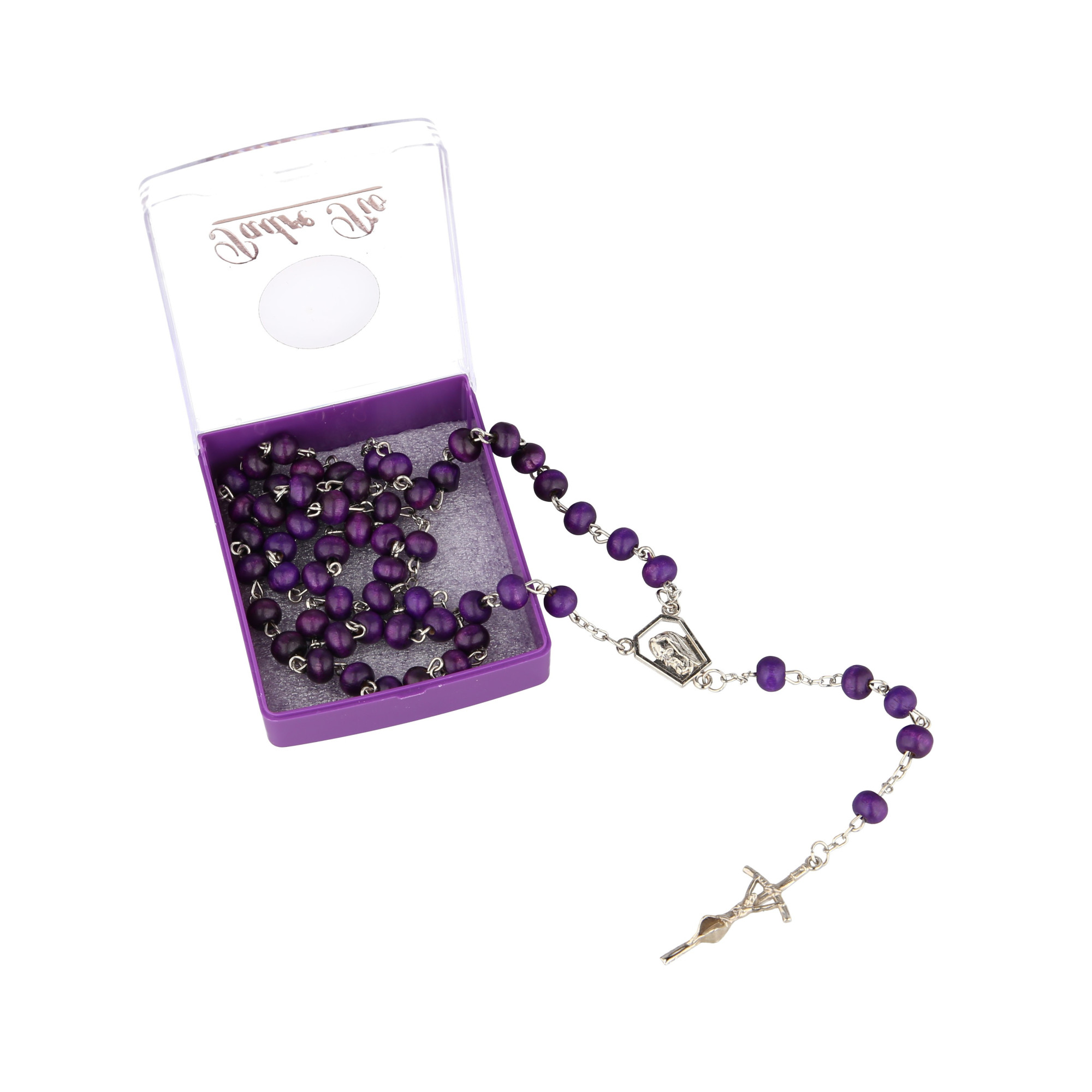
- recite the Rosary;
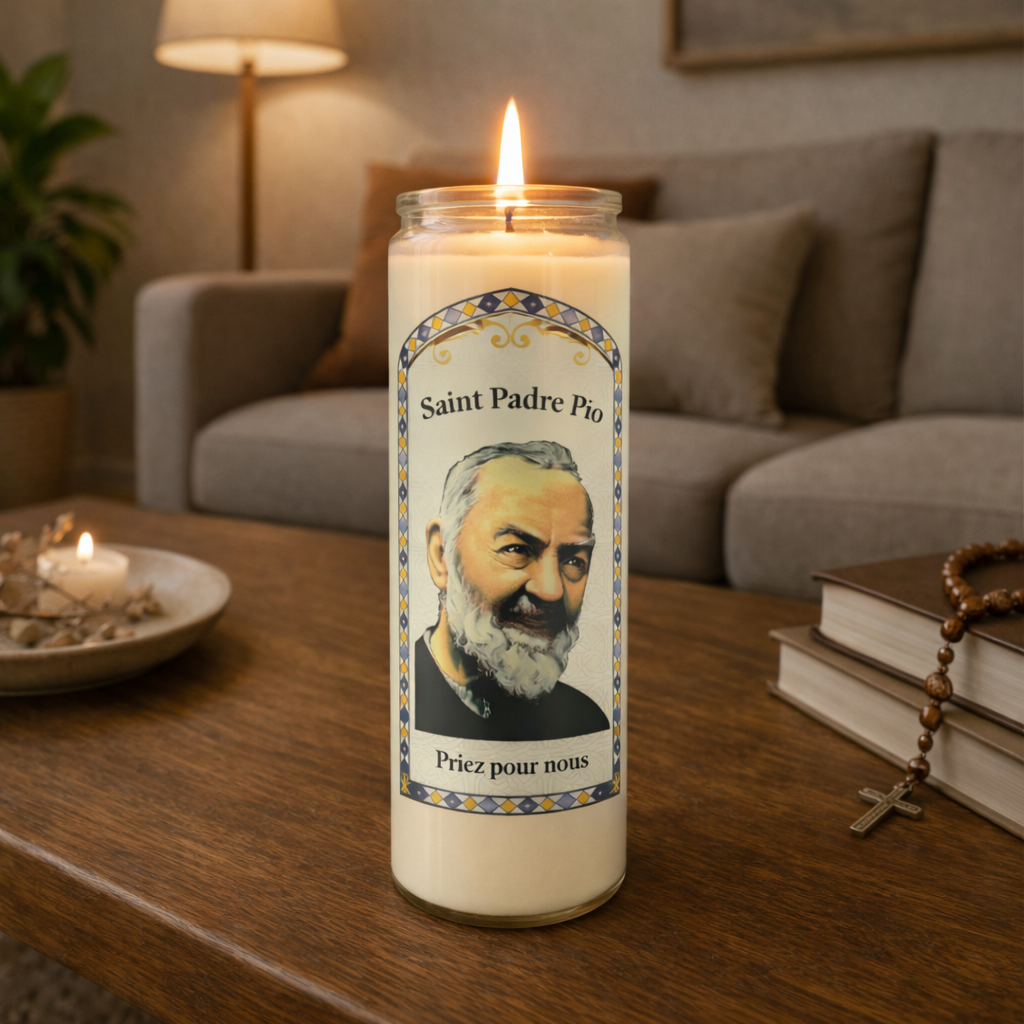
- light a candle during your time of prayer;
- attend Mass;
- read texts about his life and spirituality;
- entrust a particular intention to his intercession.
The religious object used during prayer is no guarantee that the grace sought will be granted. A candle, a rosary, a medal or a religious image can, however, serve as a tangible aid to contemplation and serve as a reminder of the intention entrusted to God.
Which religious items should you choose for praying to Padre Pio?
Religious items dedicated to Saint Padre Pio can accompany personal prayer, a novena or a time of contemplation. They can also make a religious gift for someone with a particular devotion to Saint Pio of Pietrelcina.
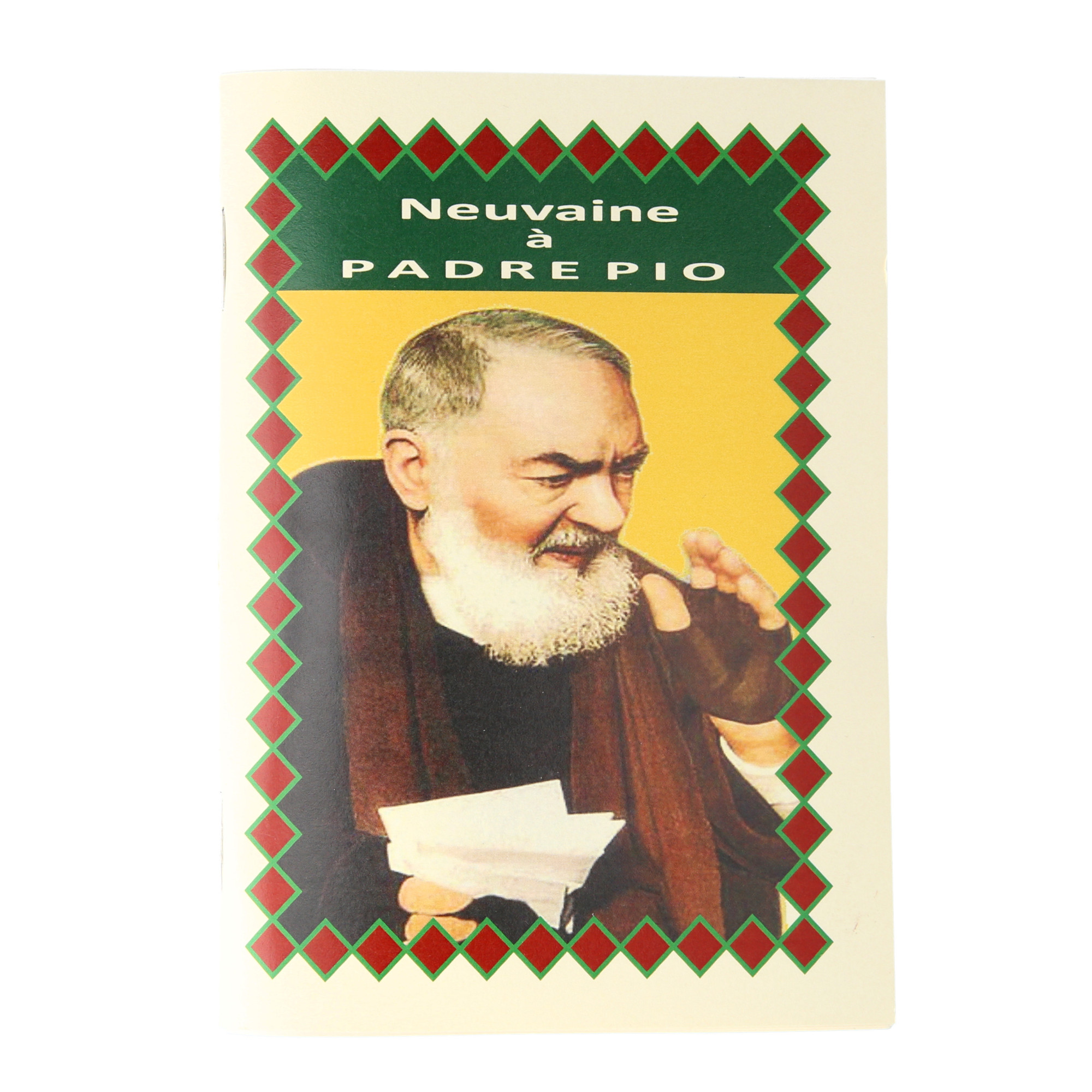
A candle or a Padre Pio novena
A Padre Pio novena candle can accompany nine days of prayer during which a particular intention is entrusted to God through the saint’s intercession.
Le Palais du Rosaire offers, in particular, a Padre Pio novena candle, which can accompany this time of prayer at home.
Each day, one can take a few minutes to reflect, review one’s intention and pray with confidence.
A Padre Pio rosary
The rosary can accompany a daily time of reflection and enable one to entrust one’s intentions to God through the intercession of Padre Pio.
To accompany this devotion, you may wish to discover the Padre Pio rosary made of cord and olive wood or the Padre Pio rosary made of white glass.
The choice of a rosary is, above all, a personal one: what matters most is the prayer it accompanies.
A Padre Pio medal or statue
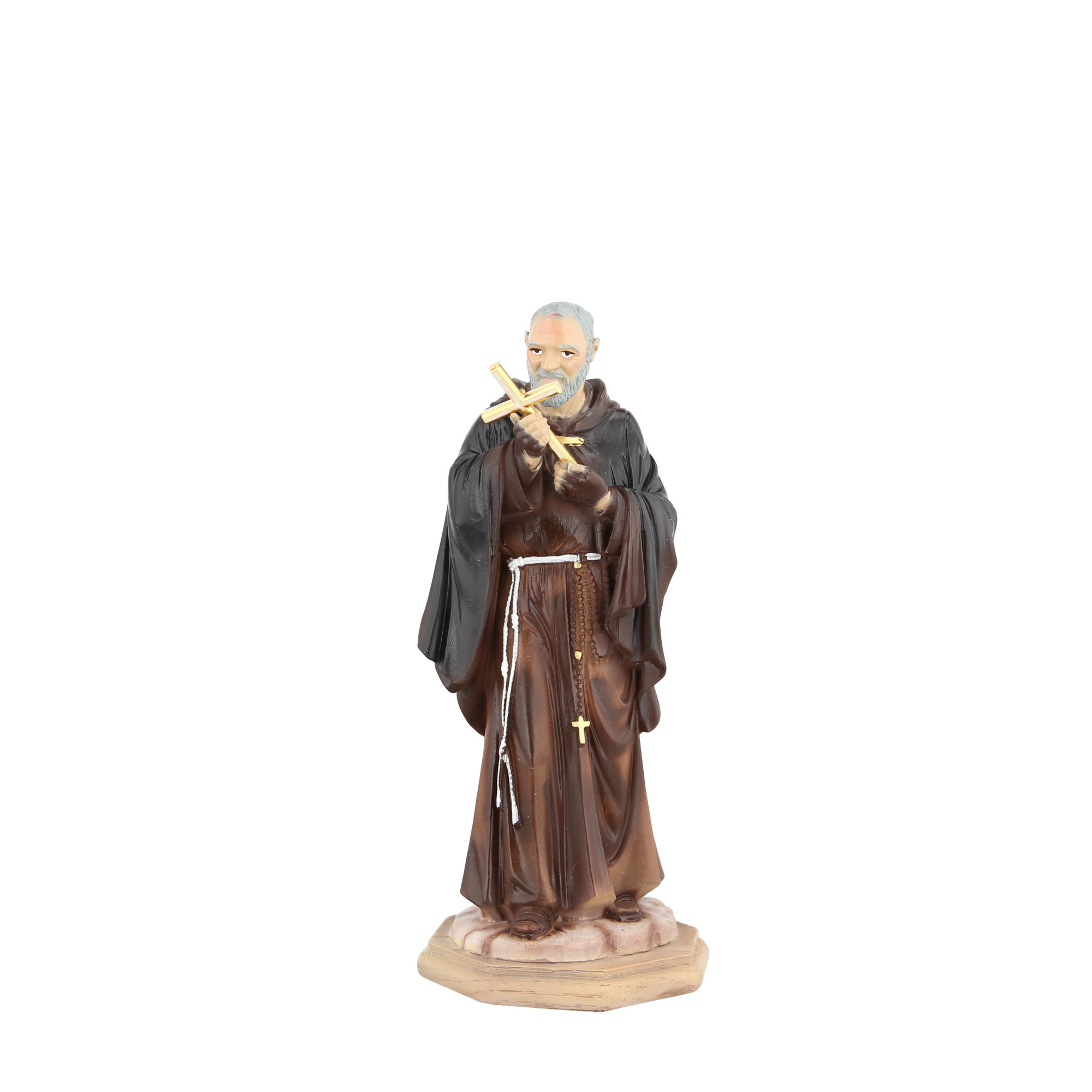
A Padre Pio medal can be worn daily as a reminder of one’s faith and his example. A statue, meanwhile, can find its place in a prayer corner, a bedroom or a space for quiet reflection.
Le Palais du Rosaire offers, in particular, a 30 cm statue of Padre Pio for those wishing to create a prayer space dedicated to the saint.
What gift should you give to someone devoted to Padre Pio?
For a religious festival, a birthday or simply to support someone in their faith, there are several religious gifts centred on Padre Pio to choose from.
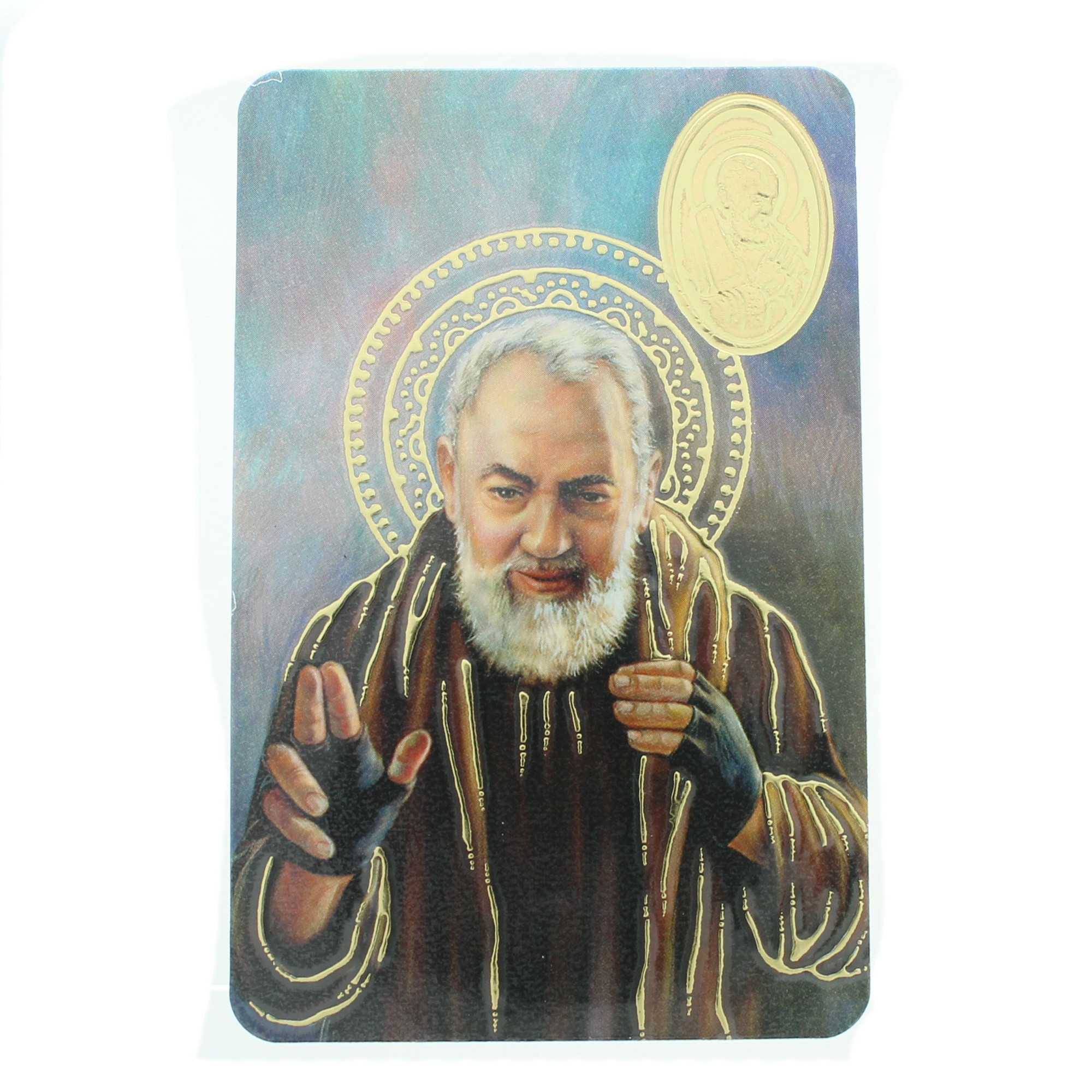
A rosary dedicated to Padre Pio, a novena candle or a statue are traditional choices. A Padre Pio prayer card is also a way of keeping a prayer close at hand.
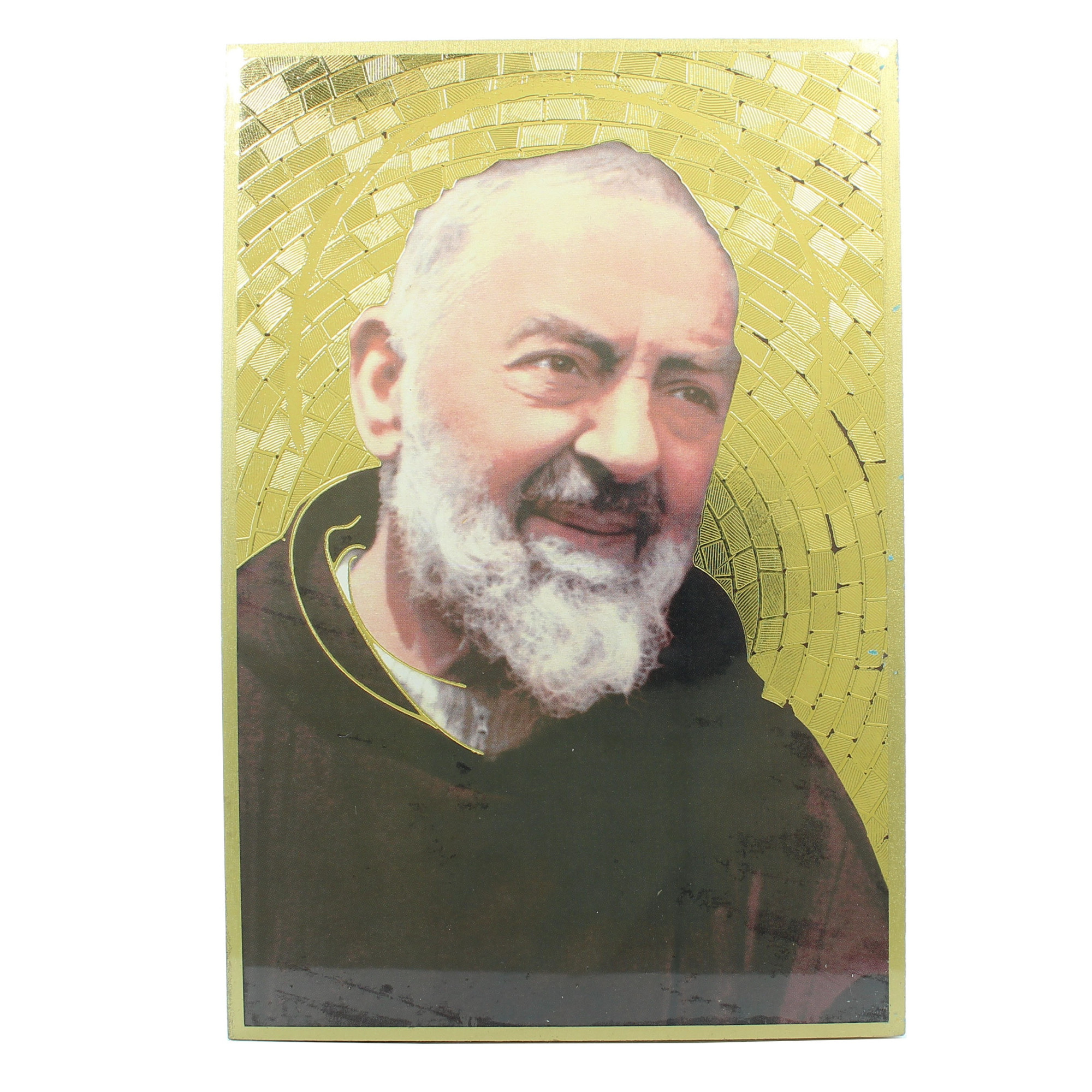
To create a space for contemplation, you could also choose a Padre Pio religious frame or some Padre Pio natural incense grains.
Discover our religious items dedicated to Padre Pio and choose an item to accompany your prayer or to give to a loved one.
Prayer to Saint Padre Pio
Saint Padre Pio,
You who devoted your life to prayer,
to the Eucharist and to the service of your brothers and sisters,
present to the Lord the intentions we hold in our hearts.
In times of trial, help us to remain confident.
In times of doubt, teach us to remain faithful.
In times of suffering, grant us the strength not to lose hope.
May your example encourage us to love Christ more deeply,
to seek forgiveness
and to serve those who suffer.
Saint Padre Pio,
intercede for us and for all those
whom we entrust today to your prayers.
Amen.
FAQs about Padre Pio
Who was Padre Pio?
Padre Pio, born Francesco Forgione in 1887, was an Italian Capuchin friar known for his life of prayer, his ministry of hearing confessions and the stigmata he bore from 1918 onwards. He died in 1968 and was canonised by John Paul II in 2002.
What was Padre Pio’s real name?
Padre Pio’s real name was Francesco Forgione. He took the religious name Pio when he joined the Capuchins.
Why did Padre Pio have stigmata?
From September 1918 onwards, Padre Pio displayed wounds on his hands, feet and side. His devotees regarded them as stigmata, reminiscent of Christ’s wounds during the Passion. These wounds were the subject of various medical and ecclesiastical examinations.
What miracles are attributed to Padre Pio?
Numerous healings and various mystical phenomena have been attributed to Padre Pio. Specific healings were examined by the Church as part of the procedures leading to his beatification and subsequently his canonisation.
When is Padre Pio’s feast day?
The feast day of Saint Padre Pio is celebrated every year on 23 September, the date of his death in San Giovanni Rotondo in 1968.
When was Padre Pio canonised?
Padre Pio was canonised by Pope John Paul II on 16 June 2002 in Rome. He had previously been beatified on 2 May 1999.
Why pray to Padre Pio?
In the Catholic tradition, the faithful may ask for Saint Padre Pio’s intercession with God, particularly during times of illness, trial or doubt, or when they wish to deepen their faith.
Where is Padre Pio?
Padre Pio spent much of his religious life in San Giovanni Rotondo, in southern Italy. His remains rest there today, and the town has become an important place of pilgrimage.
How do you say a novena to Padre Pio?
A novena involves praying for nine consecutive days, entrusting a particular intention to God through the intercession of Saint Padre Pio. A novena candle may be used during this time of prayer, though it is not compulsory.
What religious object can be used when praying to Padre Pio?
A novena candle, a rosary, a medal, a statue or a prayer card can be used during a time of prayer dedicated to Padre Pio. These objects are aids to devotion and do not replace the prayer itself.
 Preparations for Pope Leo XIV’s visit to Lourdes in 2026
  Torchlight Procession in Lourdes - A moment of Prayer and Light
  The Popes at Lourdes: from John Paul II to Leo XIV’s visit in 2026
  Biblical first names: meanings and ideas for girls and boys in 2026
  What is the Assumption?