 Français
 Italiano
 English

December is approaching, and with it comes one of the most anticipated symbols of the Christmas season: the Advent calendar. Much more than a simple countdown to December 25, it carries deep meaning for Christians. Discover the origins of the Advent calendar, its spiritual significance, and be inspired by our religious models to fully experience this time of preparation in faith and joy.
What is the meaning of the Advent calendar?
Definition and origin of the word “Advent”
The word Advent comes from the Latin Adventus, meaning “coming” or “arrival.” It is not merely what comes “before” Christmas, but the fervent expectation of the coming of Christ. This period covers the four weeks leading up to December 25 and begins on the fourth Sunday before Christmas.
Religious origin: the four Sundays of Advent
Advent finds its roots in the early centuries of the Church. It became structured between the 5th and 6th centuries as a time of fasting, conversion, and prayer. Each Sunday of Advent carries a special meaning:
- 1st Sunday: Hope — God keeps His promises.
- 2nd Sunday: Peace — Prepare the way of the Lord.
- 3rd Sunday: Joy — Gaudete Sunday, rejoice for the Lord is near.
- 4th Sunday: Love — Mary welcomes Jesus with faith and trust.
The Advent wreath and candles
The Advent wreath is a circle of fir branches adorned with four candles, lit progressively each Sunday. It symbolizes the growing light as Christmas approaches — the light of Christ coming to illuminate the world. It invites us to active waiting, vigilance, and Christian hope.
What the Bible says about Advent
Although the word “Advent” does not appear explicitly in the Gospels, many passages announce the coming of the Messiah. The Gospel of Matthew, the prophecies of Isaiah, and Paul’s letters call the faithful to “watch,” “prepare,” and “repent.” This is the essence of Advent: a biblical season of active waiting, turning toward God in faith.
The evolution of the calendar: from Lutheran tradition to modern versions
The Advent calendar as we know it today was born in 19th-century Germany, in Protestant families. Children received a devotional image, a Bible verse, or a small treat each day. In the 1920s, the first printed calendar with opening windows appeared. After World War II, calendars diversified with small gifts and chocolates.
Today, in response to overconsumption, many Christian families are rediscovering the spiritual dimension of the Advent calendar, through prayer, the Nativity scene, or concrete commitments.
A strong Christian symbol
The Christian Advent calendar aims to place Christ back at the heart of Christmas. In a society where the holiday is often reduced to its commercial side, it calls us to slow down and reconnect with God.
Each week of Advent corresponds to a powerful theme: hope, peace, joy, and love. Four candles are lit, one each Sunday, on an Advent wreath, symbolizing the increasing light as the Savior's birth draws near.
There is also symbolism tied to biblical figures encountered during this season: Isaiah, John the Baptist, Mary, and Joseph. The Christian Advent calendar can thus become a simple catechetical journey, lived as a family or community.
Through this ritual, we prepare to welcome Christ not only into the manger but also into our lives, through prayer, charity, and inner silence.
Our religious Advent calendars to fully live the wait for Christmas
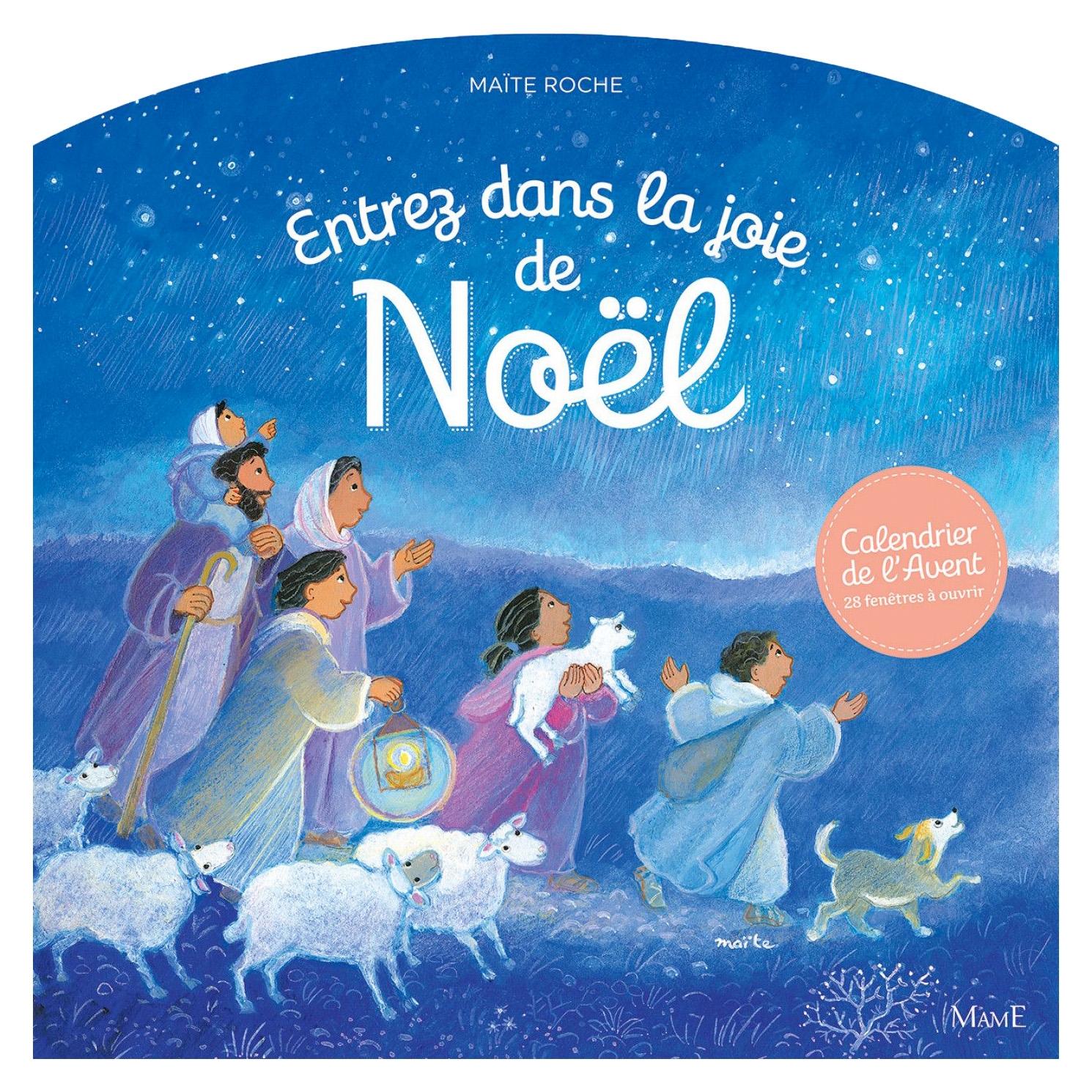
At Palais du Rosaire, we believe that the Advent calendar is a wonderful opportunity to pass on the faith — especially to children, but also to adults seeking spirituality. That’s why we offer unique models rooted in Christian tradition.
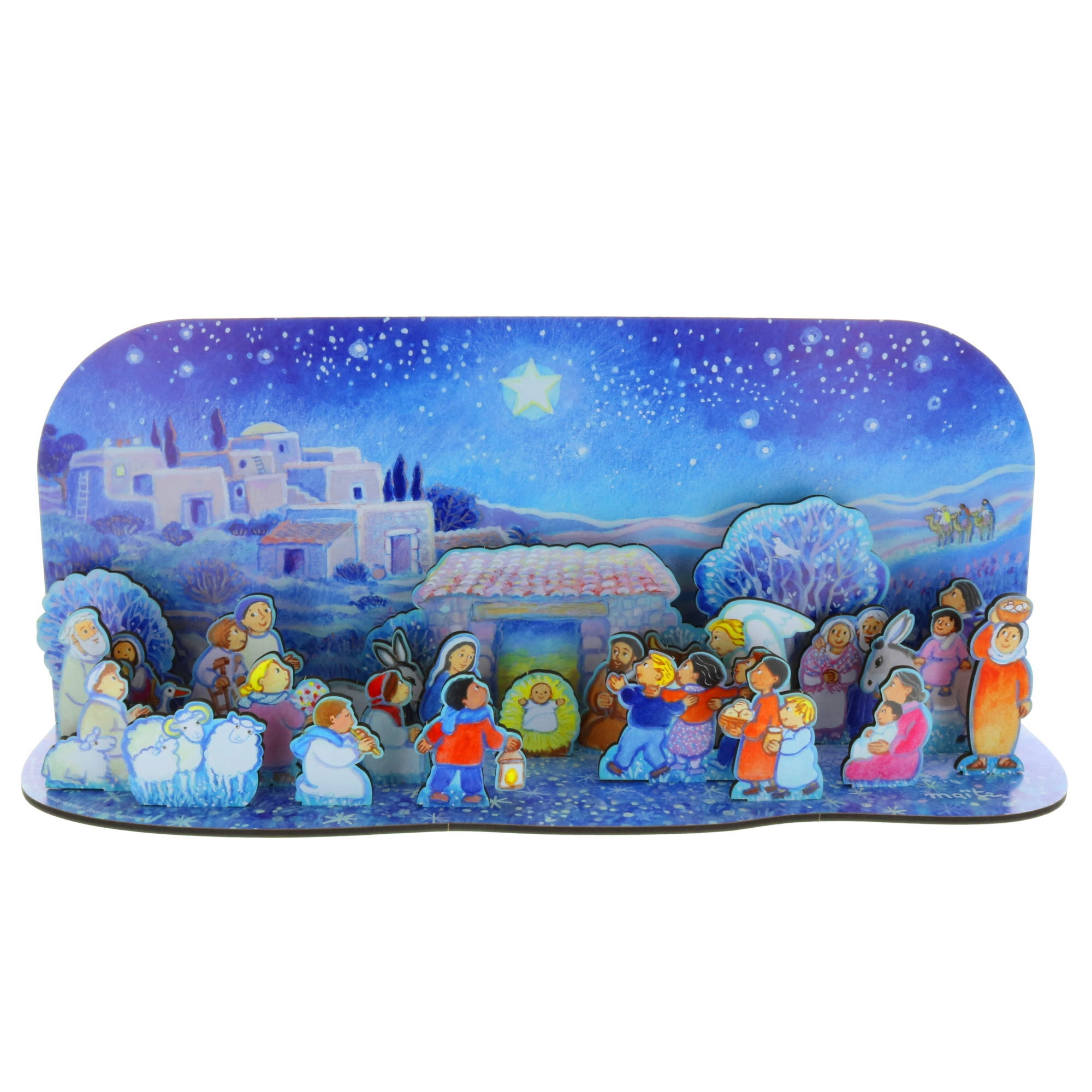
Advent calendar with Nativity scene figures
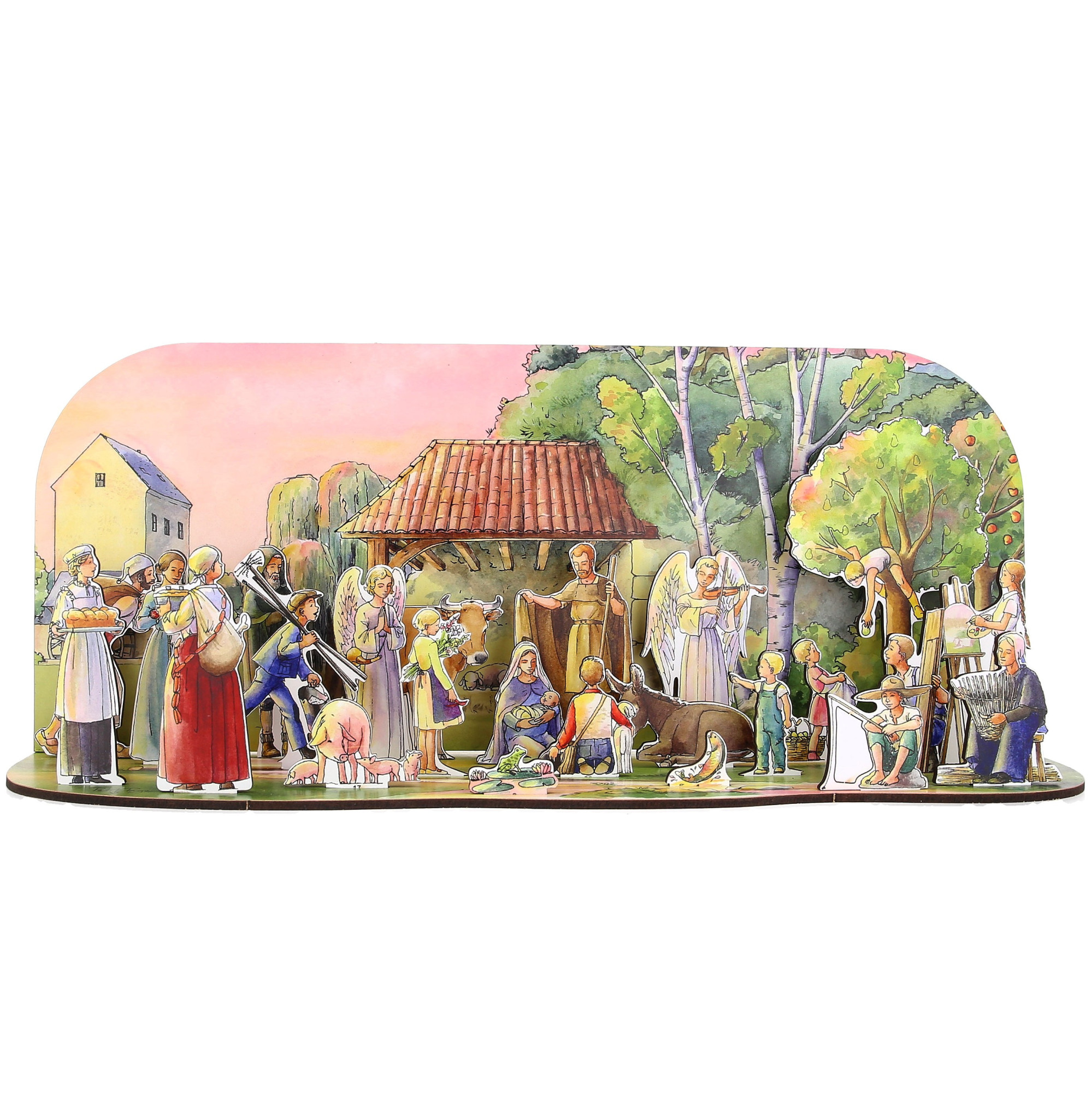
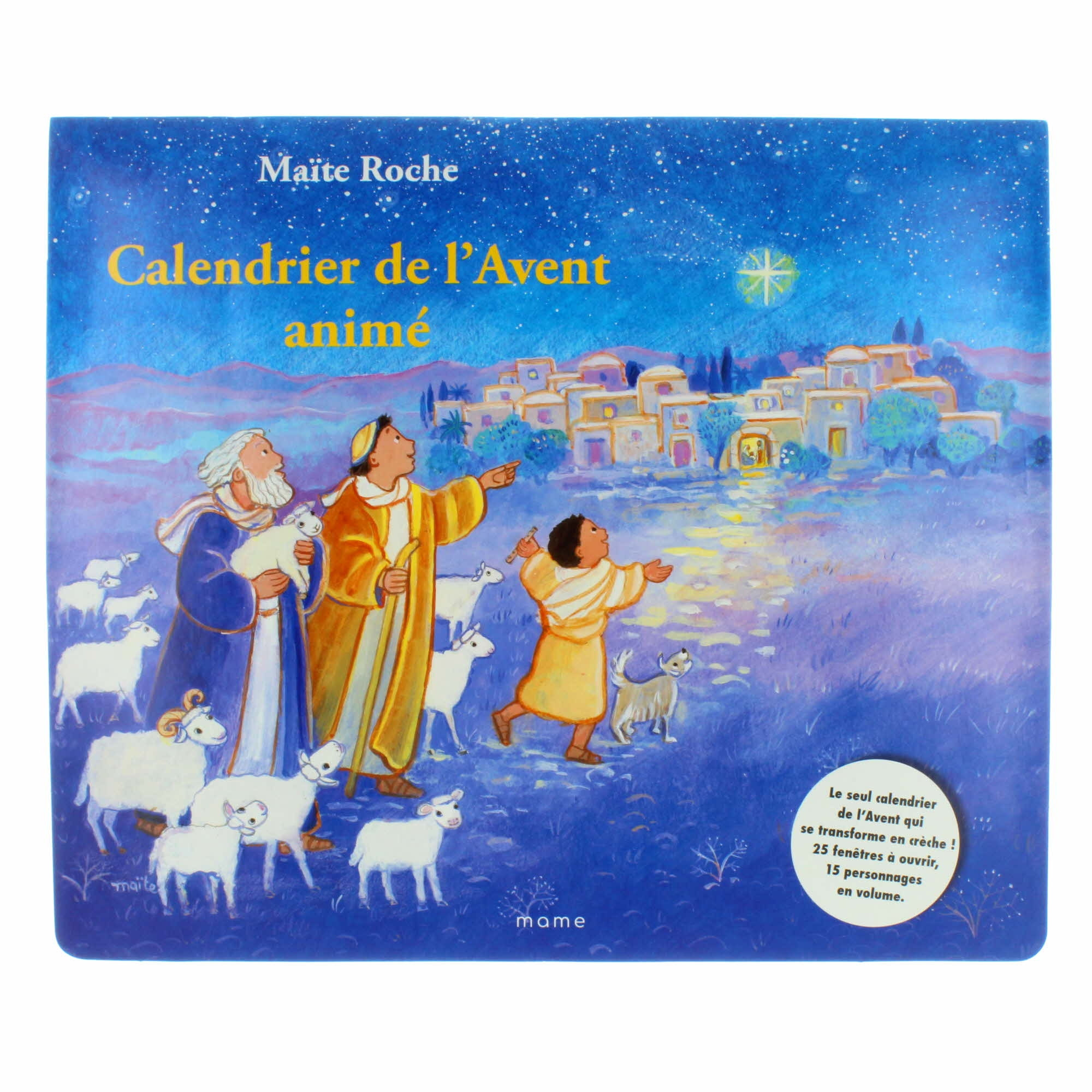
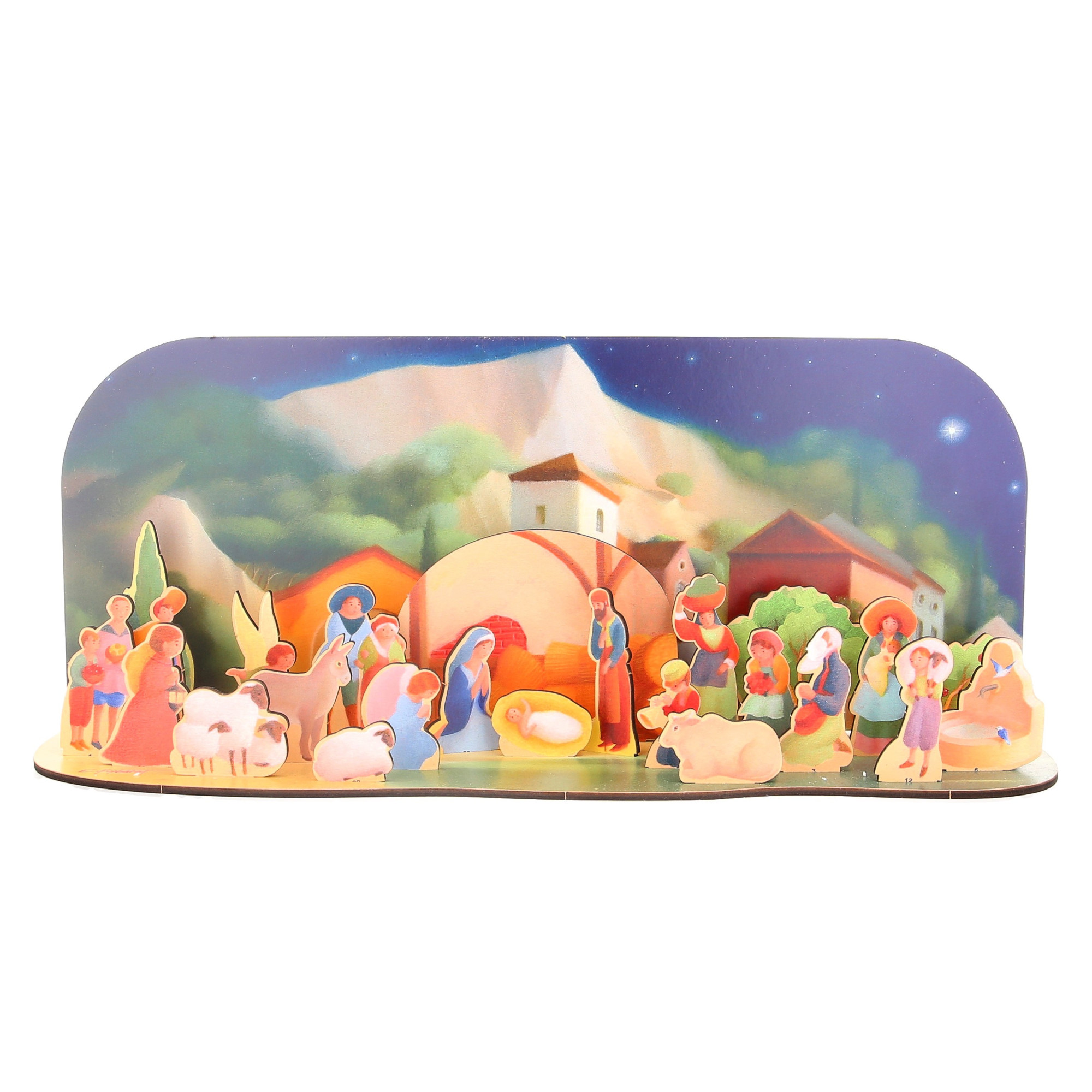
Each day reveals a new figure: the donkey, the ox, the shepherds, the angels, Mary, Joseph, and of course, baby Jesus to be placed on December 24. This fun and catechetical format allows you to build a beautiful Nativity scene step by step, while meditating on each biblical character’s meaning.
Perfect for children and adults alike, this calendar brings together the Nativity tradition and the daily rhythm of Advent, for a rich and spiritual experience.
Advent calendar with daily prayers
This model offers a daily prayer, Gospel verse, or short meditation to nourish your relationship with God and walk peacefully toward Christmas. It's perfect for anyone seeking inner peace or wanting to sanctify daily life despite a busy schedule.
It can be used alone, as a couple, or with family, and fits perfectly into a morning or evening prayer moment. Some models even include a spiritual guide booklet.
Discover our religious Advent calendars
Prayer for Entering into Advent
Lord,
in this Advent season, prepare my heart to welcome You, just as one prepares a home for a precious guest. Come dwell within me, come light up the dark corners of my soul with the brilliance of Your presence.
Help me to live each day in hope of Your coming, not as passive waiting, but as an interior movement toward You. May each morning be a new birth, each evening an offering.
Open my eyes to Your light, even when the darkness feels heavy. Help me to recognize the subtle signs of Your presence — in simple gestures, in encounters, in silence.
Bring peace to my heart — a peace the world cannot give. In my worries, doubts, or weariness, pour out the trust that comes from You alone.
Make my hands ready for charity. May I know how to reach out, comfort, share, forgive, and listen. May my actions be lights for others in the night.
Teach me to be silent so I can hear Your voice — not in the noise of life, but in the whisper of the soul. Speak, Lord, for Your servant is listening.
Lead me to the manger, step by step, with Mary, Joseph, the shepherds, and the angels. Let my Advent be a journey to Your heart, a path to true joy.
May this time of preparation grow my faith, nourish my love, and deepen my desire for prayer. Come, Lord Jesus, do not delay. Amen.
 Preparations for Pope Leo XIV’s visit to Lourdes in 2026
  Torchlight Procession in Lourdes - A moment of Prayer and Light
  The Popes at Lourdes: from John Paul II to Leo XIV’s visit in 2026
  Biblical first names: meanings and ideas for girls and boys in 2026
  What is the Assumption?