 Français
 Italiano
 English

The Assumption is the Catholic feast day commemorating the Virgin Mary’s assumption, body and soul, into the glory of Heaven at the end of her earthly life. Celebrated every year on 15 August, it is one of the major Marian feasts in the liturgical calendar. This ancient belief of the Church was solemnly defined as a dogma in 1950 by Pope Pius XII. For Catholics, the Assumption of the Virgin Mary not only celebrates her glorification before God: it is also a powerful sign of hope. It reminds us of the resurrection and eternal life to which those who live in Christ are called. Understanding the significance of the Assumption thus enables us to discover the full spiritual richness of the feast on 15 August.
Key points about the Assumption
- The Assumption concerns the Virgin Mary.
- It is celebrated every year on 15 August.
- Mary is taken up body and soul into the glory of Heaven.
- The dogma of the Assumption was proclaimed by Pius XII in 1950.
- The Assumption is different from the Ascension of Jesus Christ.
- The dogma does not officially specify whether Mary died before her Assumption.
- 15 August is a time of great prayer and Marian devotion.
What is the significance of the Assumption?
To understand the significance of the Assumption, we must return to the very meaning of the term. The word ‘Assumption’ comes from the Latin assumere, which can mean, amongst other things, ‘to take with oneself’ or ‘to raise up’. This etymology helps us to understand a crucial distinction: Mary does not ascend to Heaven by her own power. She is raised up by God into heavenly glory.
The Catholic Church teaches that at the end of her earthly life, the Virgin Mary was raised up body and soul into the glory of Heaven. The Assumption therefore concerns Mary in her entirety.
This feast also holds profound significance for all Christians. Mary’s destiny manifests the hope of the resurrection and eternal life. In her, believers contemplate the fulfilment of Christ’s promise and the destiny to which humanity is called in the presence of God.
The Assumption thus invites us to look upon Christian life with hope. Death is not regarded as the end of all things: the Christian faith is directed towards the Resurrection and eternal communion with God. Mary, fully united with her Son, becomes for the faithful a sign of this hope.
Why is the Assumption celebrated on 15 August?
The Feast of the Assumption is celebrated every year on 15 August. This date is part of an ancient Christian tradition and today occupies a prominent place amongst the feasts dedicated to the Virgin Mary in the Catholic liturgical calendar.
15 August is, in particular, an opportunity for the faithful to attend a solemn Mass and to turn their thoughts especially towards the Virgin Mary. Depending on the parish or shrine, this day may also be marked by pilgrimages, Marian processions and times of communal prayer.
In France, 15 August is also a public holiday. The religious significance of this day remains, however, essential for Catholics: it provides an opportunity to celebrate Mary, to meditate on her Assumption and to renew one’s hope in eternal life.
In Lourdes, a town deeply linked to Marian devotion, 15 August is naturally a particularly important time of the year. Many pilgrims turn to Our Lady at this time and take part in the celebrations and prayers organised during this period.
In Lourdes, 15 August is one of the major highlights of the Marian year. You can also explore our guide dedicated to the Assumption in Lourdes and the celebrations on 15 August.
Did Mary die before her Assumption?
The question of whether the Virgin Mary died before her Assumption is frequently raised. It is important to answer this precisely: the Catholic Church has not dogmatically defined whether or not Mary died before her Assumption.
When he solemnly defined the dogma of the Assumption in 1950, Pope Pius XII used a deliberately cautious formulation. He stated that Mary, ‘having completed the course of her earthly life’, was taken up body and soul into heavenly glory.
This wording therefore affirms the core of the dogma without explicitly settling the question of Mary’s death.
Christian tradition has nevertheless long reflected on the Dormition of Mary, a tradition particularly prominent in the Eastern Churches. The term ‘Dormition’ ’ refers to the end of the Virgin’s earthly life and her passage into heavenly glory.
It is therefore inappropriate either to assert as official teaching that ‘Mary did not die’, or to present as a dogmatic certainty that she ‘died and was then resurrected’. The dogma of the Assumption affirms, above all, that at the end of her earthly life, Mary was taken up, body and soul, into the glory of Heaven.
Is the Assumption of Mary recounted in the Bible?
The Assumption of the Virgin Mary is not explicitly recounted in the Bible. There is no account in the Gospels or the other books of the New Testament that directly describes Mary being taken up, body and soul, into Heaven at the end of her earthly life.
To understand the Catholic faith in the Assumption, one must take into account the role of the Tradition of the Church, the theological reflection developed over the centuries, and Mary’s special place in the history of Salvation.
Certain biblical texts have also nourished Marian reflection and spirituality. This is particularly the case with Revelation 12:1, where ‘a woman clothed with the sun’ appears. This passage is open to several levels of interpretation and does not constitute an account of the Assumption. It has, however, traditionally been associated with Mary in Catholic spirituality and theology.
The dogma of the Assumption is therefore based on the development of the faith and the Tradition of the Church, and not on a biblical episode directly recounting the event.
What is the difference between the Assumption and the Ascension?
The Assumption and the Ascension are two different events, even though the terms are sometimes confused. The fundamental difference lies in the person concerned and in the way in which their entry into heavenly glory is understood: the Ascension concerns Jesus Christ, whilst the Assumption concerns the Virgin Mary.
The Ascension concerns Jesus Christ
The Ascension refers to the raising of Jesus Christ to Heaven after his Resurrection. It manifests his glory and divine power. The risen Christ ascends to Heaven and returns to the Father.
The Assumption concerns the Virgin Mary
The Assumption concerns Mary. Unlike Christ at the Ascension, the Virgin does not ascend to Heaven by her own power: she is raised up by God. The Assumption is therefore a grace received by Mary.
Nor should the Assumption be confused with the Immaculate Conception. The Immaculate Conception concerns the beginning of Mary’s life and signifies that she was preserved from original sin from the moment of her conception. The Assumption, on the other hand, concerns the end of her earthly life and her elevation, body and soul, into heavenly glory.
How can we observe and celebrate the Assumption on 15 August?
The celebration of the Assumption on 15 August is not limited to processions or the fact that it is a public holiday. For Catholics, this feast day can become a true time of prayer, contemplation and renewal of faith. There are several ways to fully experience this day dedicated to Mary.
Attending the Mass of the Assumption
Attending the Mass on 15 August allows one to celebrate the Assumption at the heart of the Christian community. The liturgy invites the faithful to contemplate Mary’s place in God’s plan and the hope represented by her glorification.
It is also an opportunity to entrust to God, through the intercession of the Virgin Mary, one’s personal intentions, one’s family and those who are going through a difficult time.
Praying the Rosary
The Rosary is particularly suited to the feast of the Assumption. In the Glorious Mysteries of the Rosary, the fourth mystery is specifically dedicated to the Assumption of Mary.
Meditating on it allows us to contemplate Mary raised up into the glory of Heaven and to ask for the grace to keep our gaze fixed on God.
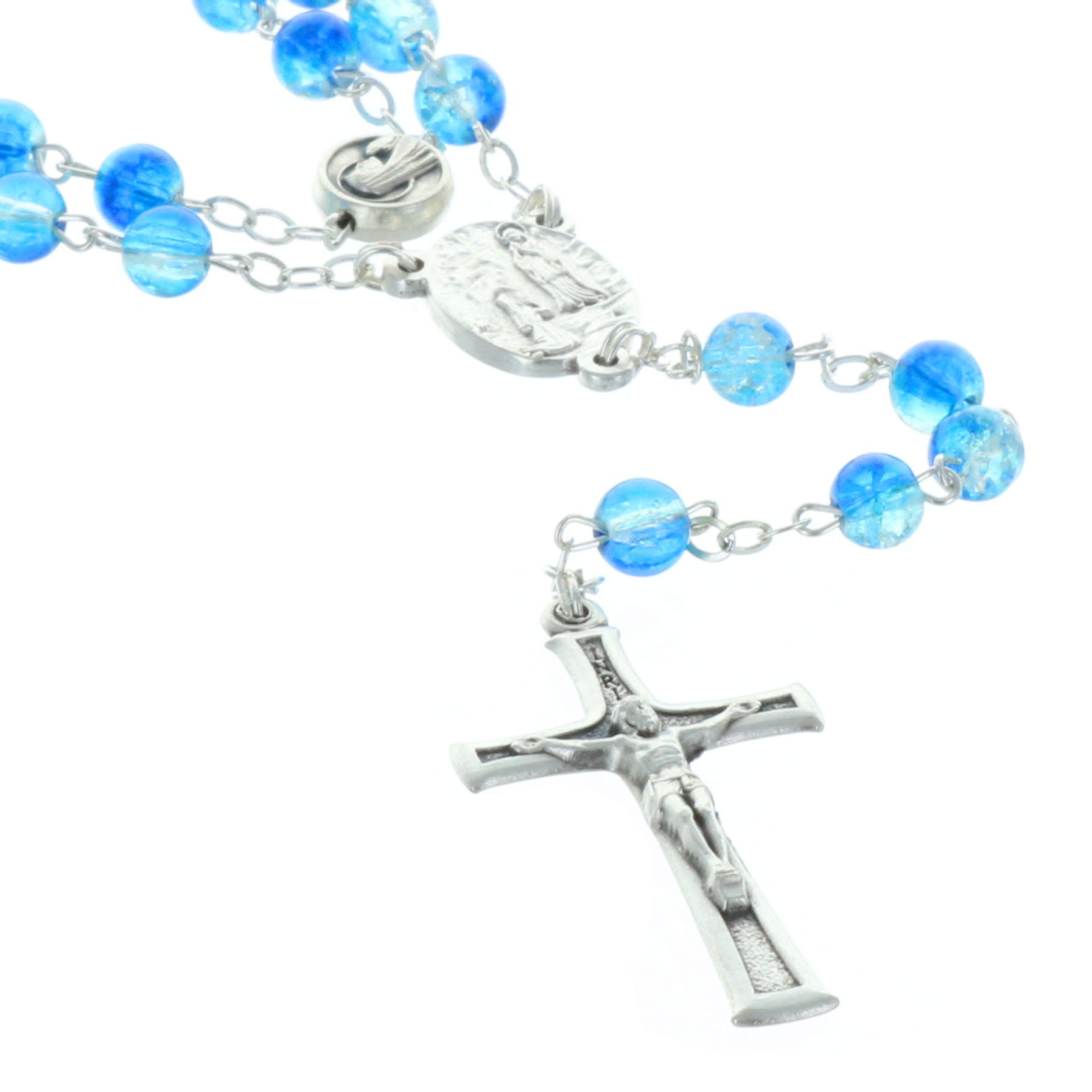
To accompany this prayer, discover our rosaries of Our Lady of Lourdes and of the Apparition. You can also find our rosaries of the Miraculous Virgin.
You can also explore this meditation further with our article on the Fourth Glorious Mystery: the Assumption of Mary.
Setting up a prayer corner dedicated to Mary
15 August can also be an opportunity to set up or refresh a small prayer corner dedicated to the Virgin Mary at home. An image of Mary, a statue, a medal or a rosary can help to create a space conducive to contemplation.
Catholics do not worship statues: they serve as a visible aid to prayer and contemplation. To set up your prayer space, discover our selection of statues of the Virgin Mary.
Taking part in a Marian procession
In some parishes and shrines, 15 August is marked by a Marian procession. Walking together, praying and carrying a light are all gestures that give a sense of community to devotion to Mary.
Candles and torches can accompany these processions and symbolise the light of faith. Take a look in particular at our torches for processional candles.
Discover our candles and torches to accompany Marian processions.
Discover our rosaries dedicated to Our Lady of Lourdes to accompany your prayers.
What religious items can be used to honour the Virgin Mary on the Feast of the Assumption?
A religious item can accompany prayer and help create an atmosphere conducive to contemplation. For the Feast of the Assumption, you can choose an item directly linked to Marian devotion and to the way in which each person wishes to observe 15 August.
A rosary for meditating on the Assumption
The rosary is particularly well-suited for meditating on the fourth glorious mystery. Depending on your devotion, you can choose a rosary of Our Lady of Lourdes or discover the rosaries of the Miraculous Virgin.
A statue of the Virgin Mary for your prayer space
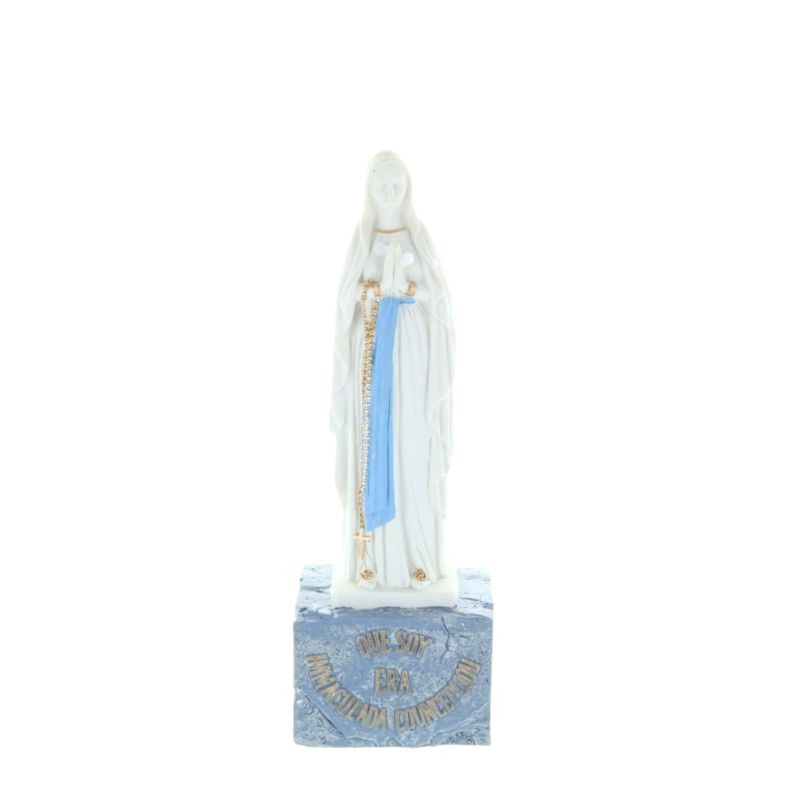
A statue of Our Lady can find its place in a prayer corner and accompany times of reflection, whether as a family or on your own. Discover our selection of statues of the Virgin Mary.
A candle to accompany your prayer
Lighting a candle can accompany a time of prayer and symbolise an intention entrusted to God. To mark 15 August, the Lourdes processional candles are particularly suitable for use during a celebration or a procession.
A torch for a 15 August procession
When taking part in a Marian procession with a candle, a torch helps to protect the flame whilst accompanying the procession and communal prayer. Discover our set of torch holders for processional candles.
Discover our full range of religious items dedicated to the Virgin Mary.
Prayer for the Assumption of the Virgin Mary
Virgin Mary, raised up into the glory of Heaven,
on this day when the Church celebrates your Assumption,
we turn to you with confidence.
You who received the Word of God with faith,
teach us to follow your Son Jesus Christ
in times of joy as well as in times of trial.
We entrust to you our families, our loved ones,
the sick, those who are alone
and all those in need of hope.
May your Assumption remind us
that our lives are meant to be fulfilled in God
and that death does not have the final say.
Mary, Mother of God and our Mother,
intercede for us with your Son
and always lead us to Him.
Amen.
FAQ on the Assumption
What is the Assumption in a nutshell?
The Assumption is the Catholic belief that the Virgin Mary, at the end of her earthly life, was taken up body and soul into the glory of Heaven.
Why is the Assumption celebrated on 15 August?
For centuries, 15 August has been the major liturgical feast day dedicated to the Assumption of the Virgin Mary in the Catholic Church. Today, it is one of the principal Marian feasts in the liturgical calendar.
What is the difference between the Assumption and the Ascension?
The Ascension refers to Jesus Christ, who ascended into Heaven after his Resurrection. The Assumption refers to the Virgin Mary, who was taken up body and soul into the glory of Heaven by God.
Is the Assumption mentioned in the Bible?
The event of the Assumption is not explicitly recounted in the Bible. The Catholic faith in the Assumption is rooted in the Tradition of the Church and its theological development.
Did Mary die before her Assumption?
Catholic dogma does not explicitly settle this question. Pius XII states that Mary, ‘having completed the course of her earthly life’, was taken up body and soul into the glory of Heaven. Christian tradition has also developed the concept of the Dormition of Mary.
When was the dogma of the Assumption proclaimed?
The dogma of the Assumption was solemnly proclaimed by Pope Pius XII on 1 November 1950 in the apostolic constitution Munificentissimus Deus.
Why is the Assumption important to Catholics?
The Assumption celebrates the glorification of the Virgin Mary in the presence of God. For Catholics, it is also a sign of hope in the resurrection and eternal life promised to believers.



 Preparations for Pope Leo XIV’s visit to Lourdes in 2026
  Torchlight Procession in Lourdes - A moment of Prayer and Light
  The Popes at Lourdes: from John Paul II to Leo XIV’s visit in 2026
  Biblical first names: meanings and ideas for girls and boys in 2026
  What is the Assumption?