 Français
 Italiano
 English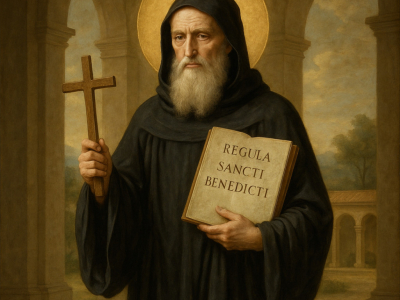

Who is Saint Benedict?
Benedict of Nursia (Latin: Sanctus Benedictus de Nursia), born around 480 in Nursia (Umbria) and died in 547 at Mont-Cassin, was the founder of the Benedictine order. Born into a noble Roman family, he left Rome at a young age to lead a life of prayer and solitude. Moved by the decadent mores of his time, he withdrew to a cave in Subiaco, where he lived as a hermit.
His influence soon manifested itself in miracles performed by the Benedictines.
His influence soon manifested itself in miracles and the formation of numerous disciples. He founded several monasteries, including the Abbey of Mont Cassin. There he wrote the famous Rule of Saint Benedict, which structures monastic life around the balance between prayer, work and reading: Ora et labora.
 (2).png)
The protective power of Saint Benedict
Recognised for his ability to ward off the forces of evil, Saint Benedict is invoked today for protection against spiritual blockages, temptations and harmful influences.
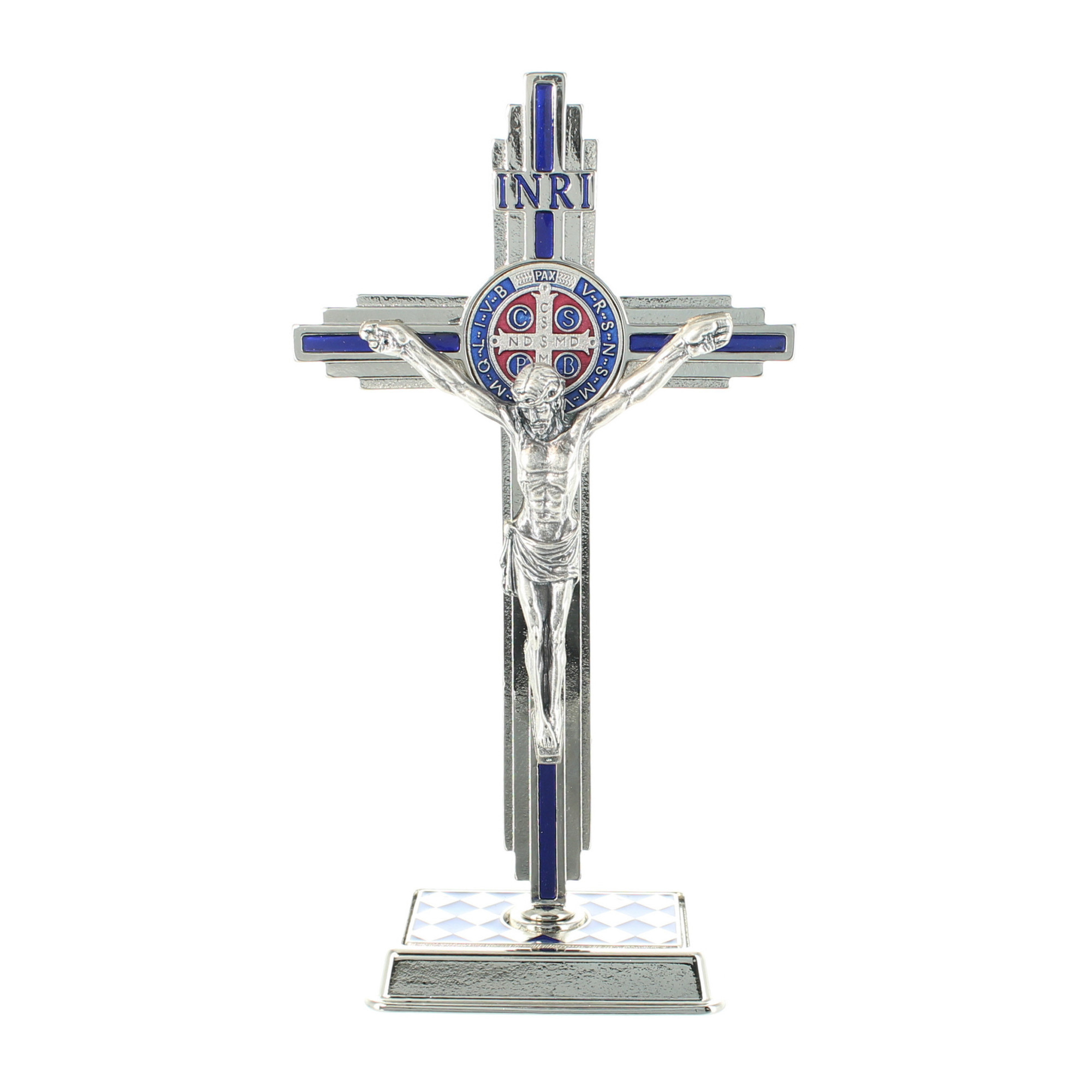
The cross of Saint Benedict is a powerful spiritual symbol. It is often worn as a pendant or hung in homes. You can wear a Saint Benedict cross as a pendant or place it in your home to ward off evil.
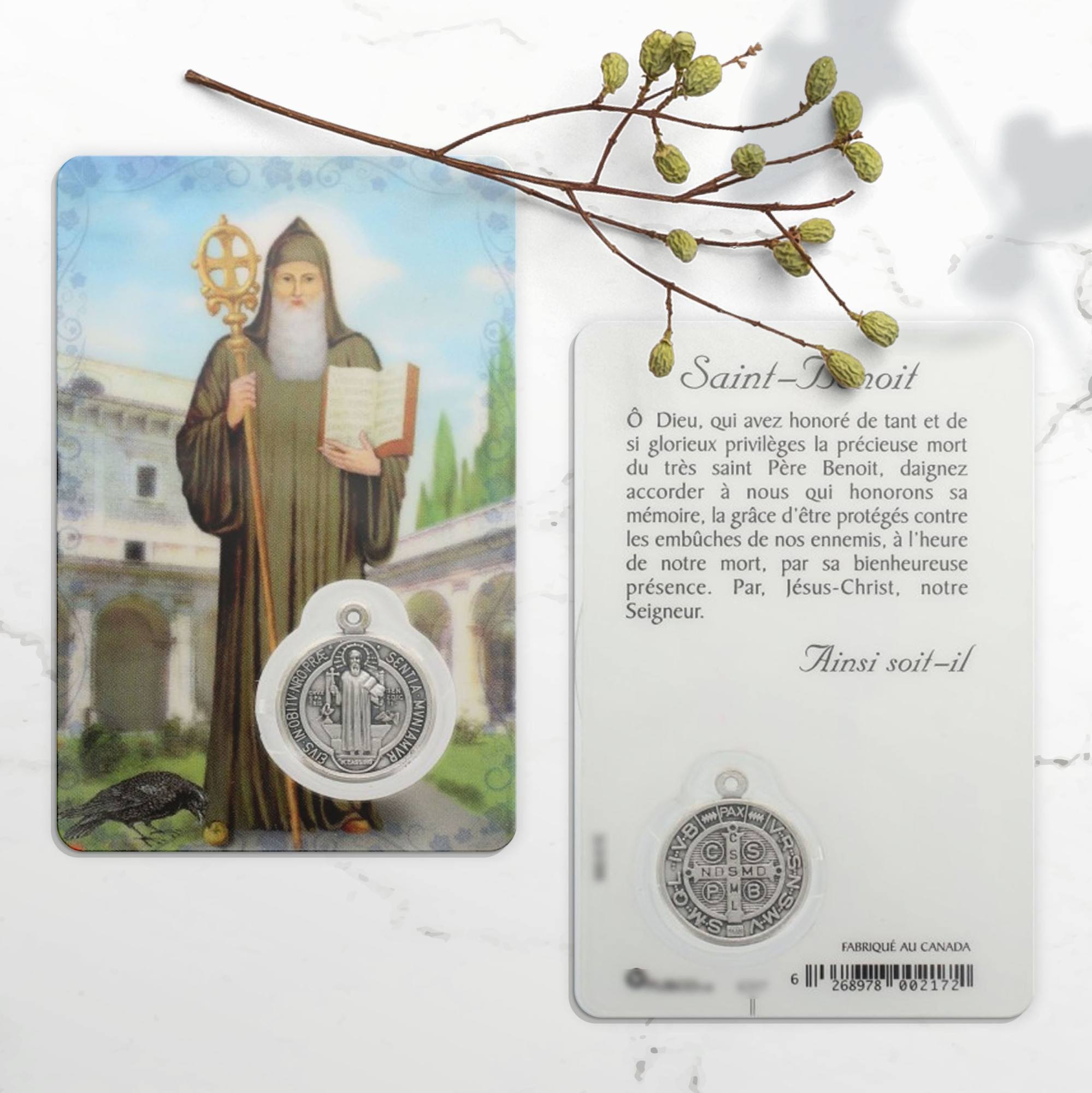
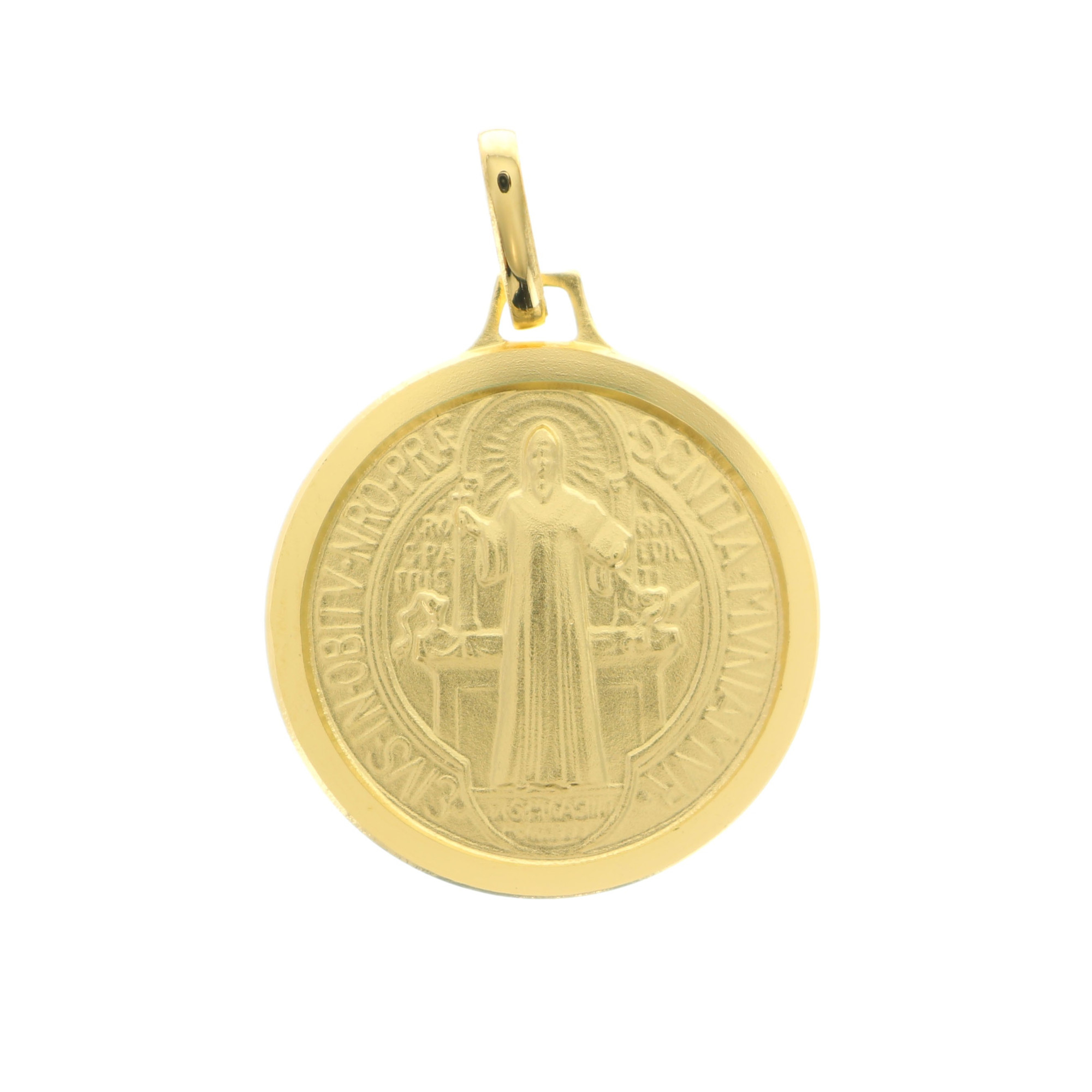
The Saint Benedict medallion, blessed by a priest, is reputed to have the power of exorcism. It contains engraved Latin prayers such as ‘Crux sacra sit mihi lux, non draco sit mihi dux’, a powerful formula against evil.
The virtues and spirituality of Saint Benedict
Humility, peace, unshakeable faith and discernment are the pillars of his spirituality. He taught perseverance in prayer and work, and the search for silence and inner peace. Today, he is the patron saint of Europe and a model for religious and lay people seeking meaning.
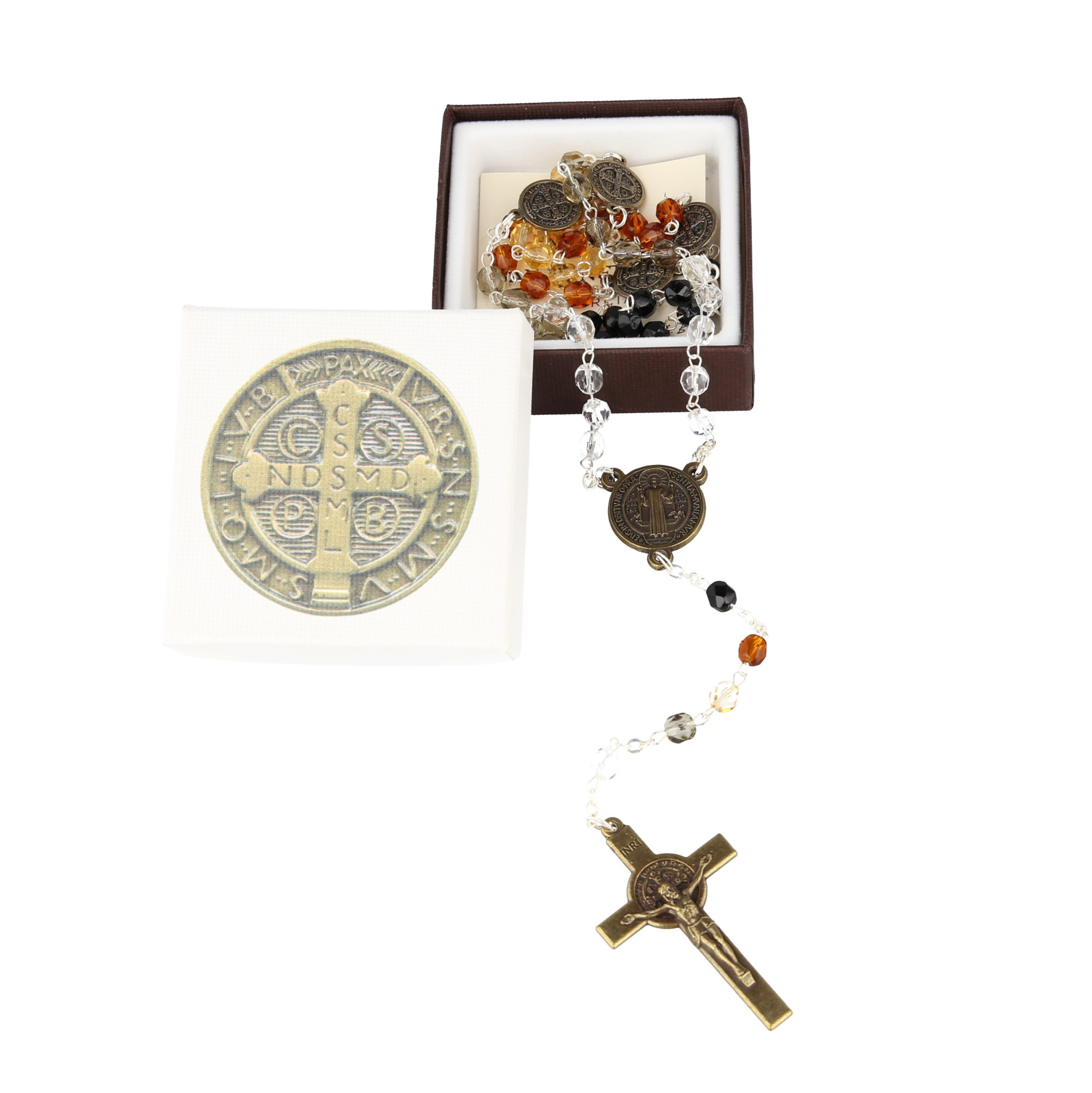
His monastic rule, still in use today, proposes a balanced life turned towards God. The rosaries of Saint Benedict allow you to meditate on his virtues while praying.
The miracles of Saint Benedict
- The poisoned chalice that breaks when he makes the sign of the cross.
- The demon driven out by prayer during the construction of the monastery.
- The miracle of Maur and Placide, when the child is saved from drowning.
- Numerous prophecies and visions through which he guides his disciples.

When is Saint Benedict celebrated?
The main feast of Saint Benedict is celebrated on 11 July, in memory of the translation of his relics. It can also be commemorated on 21 March (the date of his death) and 14 April according to certain calendars.
To honour Saint Benedict at home, you can:
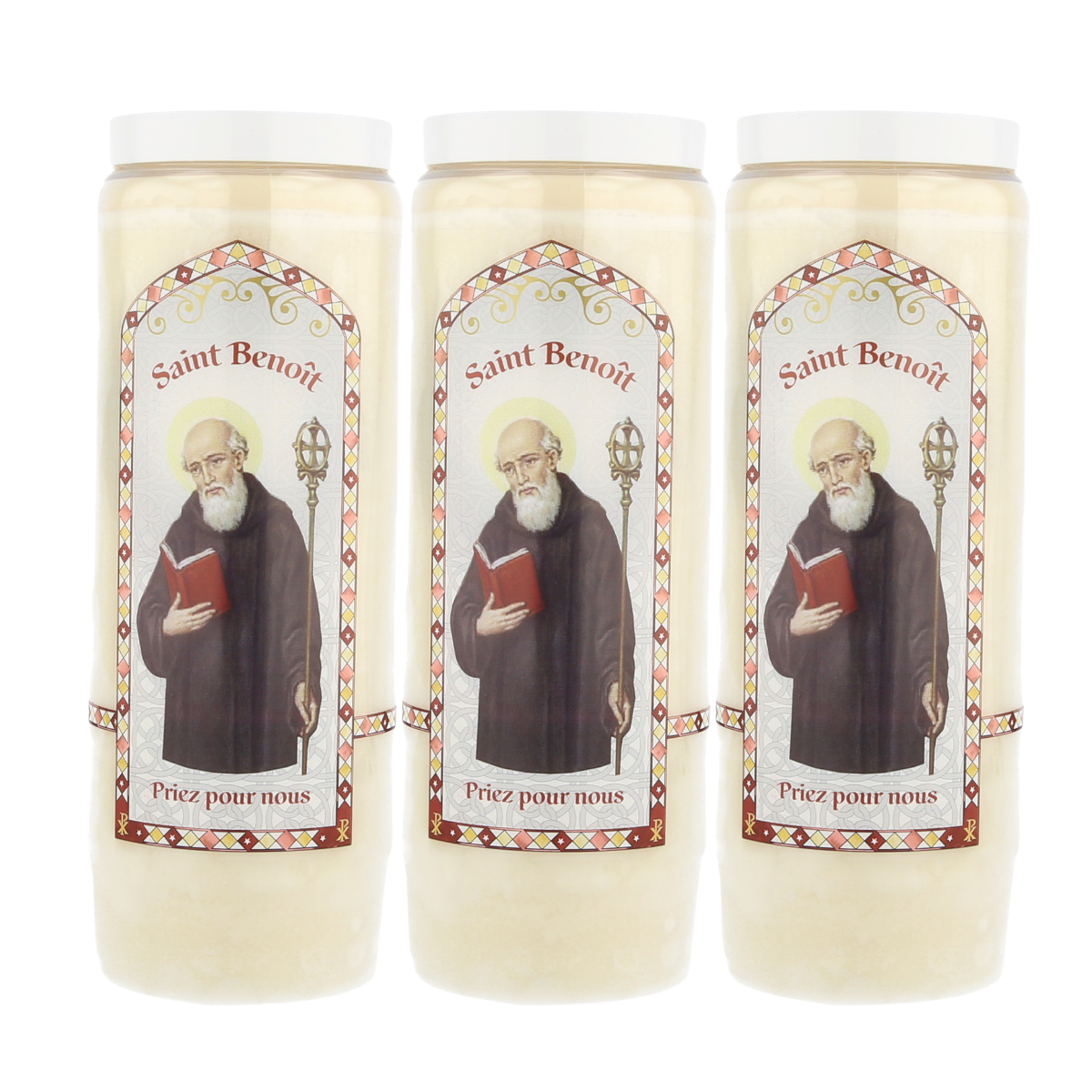
- Light a religious candle
Light a religious candle to Saint Benedict on this day to pay tribute to him.
Prayer to Saint Benedict
Lord, Almighty God,
You who guided your servant Saint Benedict on the path of holiness,
Inspire us by his example of faith, peace and wisdom.
Give us the strength to reject evil as he did,
And protect us from all demonic influence.
Through his intercession, drive away from us the spirit of division,
And grant us inner peace, clarity of judgement
And the joy of a humble and prayerful heart.
May your light, O Lord, illuminate our path
As the cross of Saint Benedict was light against darkness.
By your mercy, make us faithful witnesses,
And grant us the grace to persevere in your will.
Through Jesus Christ, our Lord.
Amen.
Frequently asked questions (FAQ)
What is the power of Saint Benedict's medal?
The Medal of Saint Benedict is reputed to protect against evil influences, bring peace and drive away temptations.
Why wear the cross of Saint Benedict?
Wearing the cross of Saint Benedict allows you to invoke his protection in times of trial and to demonstrate your Christian faith in the face of temptation.
What is the most powerful prayer to Saint Benedict?
The prayer engraved on the medal is considered the most powerful: Crux sacra sit mihi lux, non draco sit mihi dux.
How to use the Saint Benedict medal
It can be worn on your person, hung around the house, placed under a pillow or used during prayers of protection after blessing.
What are the symbols engraved on the medal?
The medal features a cross, the initials of a Latin exorcism prayer and the name of Saint Benedict, a symbol of faith and divine protection.
 Preparations for Pope Leo XIV’s visit to Lourdes in 2026
  Torchlight Procession in Lourdes - A moment of Prayer and Light
  The Popes at Lourdes: from John Paul II to Leo XIV’s visit in 2026
  Biblical first names: meanings and ideas for girls and boys in 2026
  What is the Assumption?